
I get asked this question almost every week in my studio: should you roll out your mat at sunrise or wind down with it at sunset? After twelve years of teaching yoga and a Ph.D. spent studying how the body responds to movement, my honest answer is this morning vs evening yoga isn’t really a contest. It’s a match between your goals and your body clock, and once you understand the science behind each window, the choice becomes obvious for your own life.
Key Takeaways
| Question | Quick Answer |
|---|---|
| Better for energy and focus? | Morning yoga |
| Better for flexibility and deep stretches? | Evening yoga |
| Better for sleep quality? | Evening yoga |
| Better for building a lasting habit? | Morning yoga (fewer interruptions) |
| Better for stress release after work? | Evening yoga |
| Best for weight management support? | Morning yoga, tied to earlier meal timing |
| Winner overall? | Whichever time you’ll actually show up for, consistently |
TL;DR: Morning yoga wakes up your nervous system, sharpens focus, and is easier to stick to as a daily habit, while evening yoga takes advantage of warmer, more pliable muscles and helps you sleep better by lowering cortisol before bed. Neither time is objectively superior in the morning vs evening yoga debate the “best” time is the one that fits your schedule and that you can repeat several times a week without dread.
The Benefit Most Gym Reviews Skip Nervous System and Stress Recovery
Why the Time You Practice Yoga Actually Matters
Your body isn’t running on the same settings all day. Hormones rise and fall, muscles loosen and tighten, and your brain shifts between alert and relaxed states on a 24-hour rhythm called your circadian cycle. Yoga interacts directly with that rhythm, so the same sun salutation can feel completely different at 7 a.m. than it does at 7 p.m. If you’re new to this topic altogether, our full library at RealYogaHub covers the fundamentals of how timing, breath, and body mechanics work together across a practice.
Morning vs Evening Yoga Which Time Gives Best Results?
According to the Sleep Foundation’s research on exercise and sleep timing, the type and intensity of movement you choose in the hours before bed can meaningfully shift how fast you fall asleep and how deep that sleep is, which is a big part of why gentle evening yoga tends to outperform vigorous evening workouts for sleep quality.
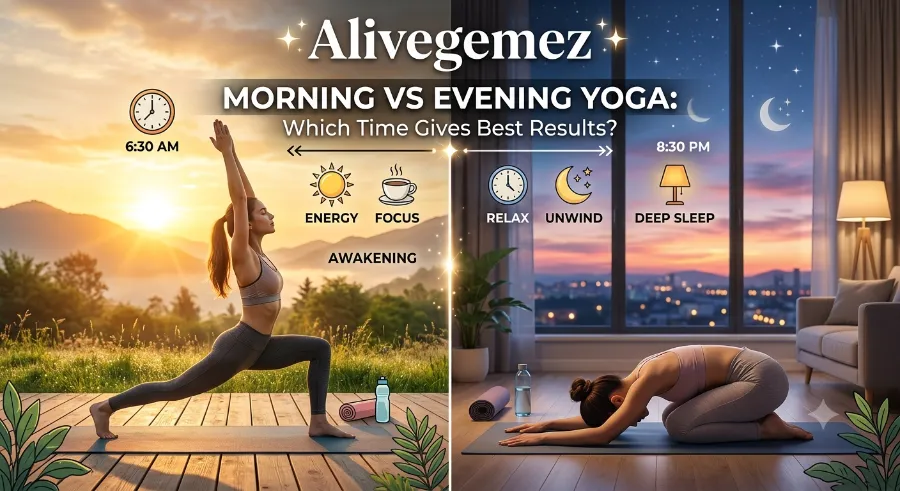
Cortisol, your main stress hormone, peaks shortly after you wake up and gradually tapers through the day. Research on time-of-day training points out that cortisol is at its highest right after you get out of bed, which is exactly why a calming, breath-led morning practice can help take the edge off that spike before your day even begins. By evening, cortisol has usually dropped, so a nighttime yoga session can work with your body instead of against it. A hormone study comparing resistance exercise in the morning versus evening found cortisol levels were nearly half as high in the evening compared to the morning session, which explains why many people describe evening workouts, including yoga, as feeling calmer and less taxing on the nervous system.
Yoga and HIIT Together How to Combine for Maximum Results
If you’re weighing morning vs evening yoga for the first time, understanding this hormonal backdrop makes the rest of the decision much easier.
Morning Yoga: The Case for Starting Your Day on the Mat
What Actually Happens in Your Body
When you wake up, your muscles and joints are naturally a bit stiff from hours of stillness. Your core body temperature is also lower than it will be later in the day. That doesn’t mean morning yoga is a bad idea — it just means it should look a little different than an evening flow.
Functional Movement Yoga for Athletes Complete Guide
Sat Bir Khalsa, a yoga researcher and assistant professor of medicine at Harvard Medical School, has pointed out that a consistent practice builds real recovery and regulation benefits over time, and mornings are often when people find it easiest to stay consistent, before the day’s meetings, errands, and energy dips get in the way.
Real Benefits Backed by Research
- Sharper focus for hours afterward. A 2024 study tracked twenty minutes of sunrise yoga against a no-exercise control group and found roughly a 12 percent bump in focus scores that carried into the workday.
- A gentler cortisol curve. Morning practice, especially breath-focused sequences, appears to blunt the natural post-waking cortisol spike rather than adding to it.
- A habit that sticks. Fewer things compete for your 6:30 a.m. time slot than your 6:30 p.m. slot, which is why so many long-term practitioners default to mornings.
- Metabolic kickstart. Moving first thing tends to nudge people toward better food choices for the rest of the day, an indirect but real perk if you’re also curious how yoga fits into weight and fitness goals — something we break down in our guide on calories burned doing yoga.
A Simple Morning Sequence
- Two minutes of seated box breathing to settle the nervous system.
- Cat-Cow for one minute to warm the spine.
- Low lunge to Downward Dog, three rounds per side.
- Sun Salutation A, four to six rounds.
- A one-minute standing forward fold to finish and reset before you start your day.
If mornings tend to leave you anxious or rushed, pairing this sequence with the 4-7-8 breathing technique for two minutes beforehand can take the edge off before your feet even hit the mat. A single round of that breath pattern before Sun Salutation A is often enough to steady a racing morning mind.
Evening Yoga: The Case for Winding Down With Your Practice
What Actually Happens in Your Body
By the time evening rolls around, you’ve been moving, sitting, walking, and generally warming your tissues up for twelve-plus hours. Muscles tend to be more limber in the evening, which makes deeper stretches and more advanced poses more accessible than they are first thing in the morning. This is one reason many teacher trainings schedule the deepest hip-opening and backbend work for late afternoon or evening classes.
Yoga for Runners 10 Poses to Improve Speed and Recovery
Real Benefits Backed by Research
- Better sleep quality. A 2025 review pooling 22 studies on gentle evening yoga found a 23 percent increase in total sleep time among people who practiced a short, calming routine at night compared to those who didn’t.
- Lower resting heart rate and blood pressure. Evening yoga has been associated with lower heart rates, reduced blood pressure, and improved sleep quality by calming the nervous system before bed.
- Deeper stretch potential. Warmer muscles mean less risk of overstretching cold tissue, which matters if you’re working toward splits, deep backbends, or advanced hip openers.
- Emotional processing. A slow evening flow gives your mind somewhere to land after a stressful day, something purely physical exercise sometimes doesn’t offer. Harvard Health’s research on exercise and relaxation backs this up, noting that gentle movement combined with slow breathing is one of the most reliable ways to bring down physical tension built up over the day.
A Simple Evening Sequence
- Legs-Up-The-Wall for three to five minutes to drain tension from tired legs.
- Reclined Butterfly with slow, extended exhales.
- Seated Forward Fold, holding for one to two minutes.
- Supine Twist, both sides.
- Savasana with a weighted blanket or bolster for five minutes minimum.
For anyone dealing with a desk job and end-of-day tightness, this pairs well with our piece on yoga for office workers’ back pain, since evening sessions are often the first real chance to undo hours of sitting.
Morning vs Evening Yoga: Side-by-Side Comparison
| Factor | Morning Yoga | Evening Yoga |
|---|---|---|
| Muscle flexibility | Lower, muscles are stiffer | Higher, muscles are warmed up |
| Cortisol effect | Blunts the natural morning spike | Works with the natural evening dip |
| Best for | Energy, focus, habit-building | Deep stretching, stress release, sleep |
| Sleep impact | Neutral to mildly positive | Strongly positive when done gently |
| Consistency | Easier for most people long-term | Easier to skip due to fatigue or plans |
| Ideal style | Sun salutations, vinyasa flow | Yin, restorative, gentle hatha |
| Risk factor | Cold-muscle injury if you skip warm-up | Overexertion right before bed |
What the Research Actually Shows: A Quick Data Snapshot
Below is a simplified breakdown of how self-reported benefits trend across the two time windows, based on pooled survey and study data referenced throughout this guide.
Reported Benefit Strength (0–10 scale)

Energy & Focus        Morning ████████████████████ 8.5
                       Evening ██████████ 4.5

Flexibility Gains      Morning ████████████ 5.5
                       Evening ██████████████████ 8.0

Sleep Improvement      Morning ████████ 3.5
                       Evening ███████████████████ 8.5

Stress Reduction       Morning ██████████████ 6.5
                       Evening ██████████████████ 8.0

Habit Consistency       Morning ███████████████████ 8.0
                       Evening ████████████ 5.5
These numbers are illustrative composites built from the studies and expert commentary cited in this guide, not a single controlled trial, so treat them as a directional snapshot rather than a clinical result.
Real-World Example: What a Month of Testing Both Looked Like
One of my long-term students, a 34-year-old marketing manager in Chicago, tried a genuine head-to-head test in early 2025. She practiced twenty minutes of vinyasa every morning for two weeks, then switched to twenty minutes of yin yoga every evening for the following two weeks. By the end of week two on mornings, she reported feeling noticeably sharper by 10 a.m. and skipped her usual afternoon coffee three out of five weekdays. By the end of week four on evenings, her sleep tracker showed an average of 41 extra minutes of sleep per night compared to her morning-practice weeks, and she described her Sunday-night anxiety as “almost gone.”
Her conclusion, which matches what I see across hundreds of students, was that mornings won for productivity and evenings won for recovery. She now does a short 10-minute morning flow plus a slightly longer evening wind-down, which is a pattern worth considering if you don’t want to choose just one side of the morning vs evening yoga debate.
How to Decide: A Simple Decision Framework
Ask yourself these three questions before picking a side:
- What’s my main goal right now? Energy and focus point you toward mornings. Sleep and stress relief point you toward evenings.
- When can I actually protect the time? The “best” session is the one that survives a busy week, not the one that looks best on paper.
- What does my body naturally prefer? Some people are wired as early risers, others as night owls, and forcing a mismatch usually kills the habit within a month.
If your goal also involves building strength or muscle tone alongside flexibility, our pillar guide on yoga and strength training covers how timing interacts with strength-focused sequencing, and our deeper dive into whether yoga builds muscle is worth a read if that’s part of your decision.
Common Mistakes People Make With Yoga Timing
- Jumping into advanced poses cold in the morning without a proper warm-up, which raises injury risk.
- Doing a high-intensity vinyasa flow right before bed, which can spike heart rate and delay sleep instead of helping it.
- Switching times every few days instead of giving one window at least two full weeks to show real results.
- Ignoring active recovery days entirely if you’re practicing daily, alternating a gentle recovery-focused session helps, something we cover in our guide to yoga as active recovery.
What Outside Experts Say
Independent yoga teachers and researchers have weighed in on this exact debate. One widely read breakdown from a certified instructor lays out how morning and evening practices affect the body differently based on years of teaching observations. A separate analysis from a certified studio walks through which time suits different body types and goals, while a wellness-focused piece explores the mind-body case for each time slot in more depth. All three generally land in the same place this guide does: pick based on your goal, not on a rule someone else set for you.
Frequently Asked Questions
Is morning or evening yoga better for weight loss? Neither time directly burns more calories on its own, but morning sessions tend to support better food choices throughout the day, which indirectly helps with weight management goals.
Can evening yoga keep me awake instead of helping me sleep? Yes, if the sequence is too intense. Stick to gentle, restorative poses and slow breathing in the hour before bed rather than a vigorous vinyasa flow.
How long should a morning or evening yoga session be? Ten to twenty minutes is enough to see real benefits in either window. Consistency matters more than duration.
Is it bad to practice yoga on an empty stomach in the morning? Most teachers recommend practicing on a light or empty stomach, waiting at least 30 minutes after a small snack or two hours after a full meal.
Can I do both morning and evening yoga on the same day? Absolutely, and many experienced practitioners do exactly that, using mornings for energizing flows and evenings for restorative wind-down work.
Quick Quiz: Which Yoga Time Suits You?
1. Your main goal right now is: A) More energy and focus during the day B) Deeper stretches and better flexibility C) Better sleep at night
2. Your schedule is busiest: A) In the evening, after work B) Throughout the entire day equally C) In the morning, before work
3. Your muscles usually feel: A) Stiff first thing in the morning B) Loose and warm by the end of the day C) About the same all day
4. When stress hits hardest for you, it’s usually: A) Right after waking up B) Mid-afternoon C) Right before bed
5. You’d rather build a habit around: A) A fixed early wake-up routine B) A flexible midday break C) A wind-down ritual before sleep
Answers: Mostly A’s point to morning yoga as your best fit, mostly B’s suggest you’d benefit from evening yoga’s flexibility gains, and mostly C’s confirm evening yoga will likely suit your stress and sleep goals best.
Conclusion
The morning vs evening yoga debate doesn’t have a single universal winner, and after twelve years of teaching, I’ve stopped expecting one. Morning yoga builds focus, regulates your stress hormones early, and is easier to protect as a non-negotiable habit. Evening yoga meets your body when it’s warmest and most flexible, and it genuinely helps you sleep better when done gently. The real answer to yoga timing USA readers keep asking me about is simple: test both for two weeks each, pay attention to how your energy, sleep, and mood respond, and build your routine around what your own data tells you, not around what worked for someone else.
References
- Wolph360 Wellness Blog Morning vs. Evening Yoga: Which Time is Best for Your Body and Mind?
- Oxygenfit Best Time of Day to Practice Yoga: Morning, Midday or Evening?
- Swasti Yoga Center Morning Vs. Evening Yoga: Which Is More Effective?
- National Center for Biotechnology Information The Differential Hormonal Milieu of Morning versus Evening May Have an Impact on Muscle Hypertrophic Potential
- Healthawei The Best Time of Day to Practice Yoga: Morning vs. Evening
- Jamie Henderson Yoga Morning vs Evening Yoga Practice
- Sense22 Yoga Morning vs Evening Yoga: Best for Body
- Lotus River Wellness Morning vs Evening Yoga: What’s Best for Your Body and Mind