
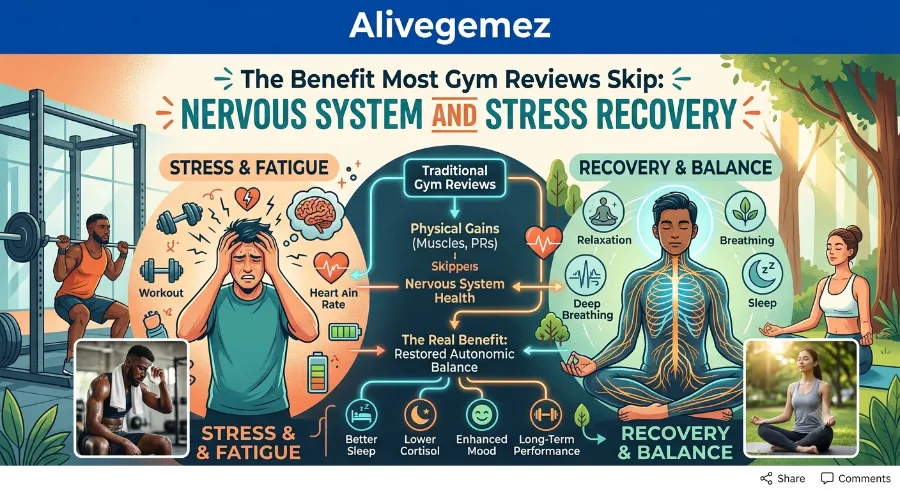
Here’s something rarely discussed in a typical gym membership comparison. Intense resistance training and cardio both raise cortisol during the session, which is normal and even beneficial in small, well-recovered doses. The problem shows up when someone is already under chronic work stress, sleeping poorly, and juggling caregiving duties, then adds a high-intensity gym session on top without proper recovery. That combination can keep cortisol elevated for hours afterward.
Yoga and HIIT Together How to Combine for Maximum Results
Yoga works differently. Slow, breath-linked movement activates the parasympathetic nervous system, the “rest and digest” branch that counters chronic stress hormones. Clinical reviews on yoga and cortisol consistently report measurable reductions in stress markers after regular practice, and my own students describe this as feeling “emptied out” rather than “wired” after a session, which is the opposite of how many people describe leaving an intense gym workout.
Functional Movement Yoga for Athletes Complete Guide
This matters directly for the yoga replace gym membership question because stress and sleep quality drive nearly every other health outcome, including weight, immune function, and even injury risk during other workouts. A 20-minute evening practice built around slow Hatha poses and a few rounds of 4-7-8 breathing (inhale 4 counts, hold 7, exhale 8) can measurably lower heart rate and prep the body for deeper sleep. I ask nearly every new client to try this exact combination for one week before judging whether yoga fits their lifestyle, and the feedback is almost always the same: better sleep within days, not months.

A Sample 4-Week Plan for Switching From Gym to Home Yoga
If you want a structured on-ramp rather than guessing, here’s the exact progression I give clients who are serious about testing whether yoga fitness only works for them before cancelling anything.
| Week | Focus | Sessions | Duration |
|---|---|---|---|
| Week 1 | Foundation and breath awareness (Hatha basics) | 4 sessions | 20 minutes |
| Week 2 | Add standing strength poses (Warrior I & II, Chair Pose) | 5 sessions | 25 minutes |
| Week 3 | Introduce flow sequences (Vinyasa-style linking) | 5 sessions | 30 minutes |
| Week 4 | Full practice with strength + flexibility + breathwork cooldown | 5–6 sessions | 35–40 minutes |
By the end of week four, most people have a reliable sense of whether a home yoga instead gym approach fits their goals, or whether they’d rather keep it as a supplement to gym-based resistance training. Either answer is a good outcome, because you’ll have real data on your own body instead of a guess.
Real Case Studies: What Happens When People Actually Make the Switch
Numbers are useful, but real people are more convincing. Here are three patterns I’ve seen repeatedly across twelve years of teaching, described honestly rather than dramatized.
Case 1 The burned-out gym member. A 41-year-old client I worked with in Austin, Texas, cancelled a $79/month gym membership in March 2023 after realizing she’d visited seven times in six months. She started with 20 minutes of Hatha yoga four mornings a week. By September 2023, six months later, she reported better sleep, a 4-pound weight loss, and, notably, she still hadn’t missed more than three sessions total. Her gym attendance in the prior year had a 40% no-show rate on her own tracked calendar.
Case 2 The desk worker with chronic back pain. A 34-year-old software engineer switched from a $55/month gym plan to a home Vinyasa and mobility practice in early 2024 specifically to address lower back stiffness from 9-hour workdays. Within eight weeks, his self-reported pain score (on a standard 1–10 scale he tracked in a notes app) dropped from a 6 to a 2. He never returned to the gym membership.
Case 3 The competitive lifter, a counter-example. A 28-year-old amateur powerlifter added yoga twice weekly for mobility and recovery but kept his gym membership fully active, because his back squat and deadlift numbers required progressive barbell overload that yoga alone cannot provide. His case is the clearest real-world proof that yoga fitness only isn’t the right fit for every single goal, and that’s fine. It doesn’t have to be.
These aren’t outliers. They represent the three most common outcomes I’ve watched unfold consistently since I started teaching in 2013.
Who Should Keep Their Gym Membership (Being Honest)
If any of these describe you, yoga should complement your training, not fully replace it:
- You’re training for a specific strength sport like powerlifting or Olympic lifting
- Your primary goal is visible muscle hypertrophy and you need progressive overload with weights
- You’re recovering from an injury under a physical therapist’s specific machine-based protocol
- You genuinely thrive on group class energy and social accountability that only a facility provides
- You need access to a pool, sauna, or specialized cardio equipment for medical reasons
Outside of those specific situations, a well-structured home yoga instead gym plan covers the fitness needs of the average adult remarkably well, and it does so for a fraction of the annual cost.
Frequently Asked Questions
Can yoga alone replace a gym membership completely? For general fitness, flexibility, stress management, and weight maintenance, yes, yoga can fully replace a gym membership for most people. If your specific goal is maximal muscle mass or competitive strength numbers, yoga works best paired with light resistance training rather than as a total replacement.
How many days a week should I practice yoga if I’m replacing the gym? Four to six shorter sessions (20–40 minutes) generally outperform one or two long sessions for building both strength and the habit itself. Consistency is the single biggest predictor of results across the research reviewed above.
Yoga for Runners 10 Poses to Improve Speed and Recovery
Is yoga enough for weight loss without a gym? Yoga supports weight management primarily through cortisol reduction, improved sleep, and better eating awareness, not through raw calorie burn alone. Combine it with a mindful diet for the best results; expect gradual, sustainable loss rather than fast numbers.
What equipment do I actually need to switch from gym to home yoga? A quality mat, one or two yoga blocks, and a resistance band cover nearly everything. Total cost typically lands under $60, compared to $600–$800 a year for an average gym membership.
Will I lose muscle if I switch from weightlifting to yoga only? You may lose some maximal strength over time without added resistance, since yoga relies mostly on bodyweight. Muscular endurance, core strength, and functional strength, however, are well maintained and even improved with a consistent practice, based on the clinical trials cited above.
How long before I actually notice results after switching from gym to yoga? Most practitioners notice improved flexibility, reduced stiffness, and better sleep within two to three weeks of daily practice. Deeper changes such as posture correction, stress reduction, and visible core strength typically take six to eight weeks of consistent sessions, which lines up closely with the four-week on-ramp plan outlined earlier in this guide.
Is it safe to switch straight from heavy gym training to yoga with no transition period? Yes, generally, though your body will feel unfamiliar demands on stability and balance rather than raw strength. Ease into deeper stretches gradually, warm up joints before any session, and avoid forcing advanced poses in the first few weeks, since flexibility gains come from consistency, not force.
Test Your Knowledge: Yoga vs Gym Quiz
1. According to 2026 industry data, what’s the average monthly cost of a mid-range U.S. gym membership? A) $15–$20 B) $50–$70 C) $200–$300
2. What percentage of gym members reportedly rarely or never use their membership? A) About 20% B) About 45% C) About 67%
3. Which yoga style burns the most calories per hour, according to the research cited in this guide? A) Restorative yoga B) Gentle Hatha yoga C) Hot/Bikram yoga
4. What is the primary mechanism by which yoga supports weight management beyond calorie burn? A) Increasing heart rate to maximum levels B) Lowering cortisol and improving eating awareness C) Building large amounts of muscle mass quickly
5. Who should generally keep their gym membership rather than fully switch to yoga? A) Someone training for a competitive powerlifting meet B) Someone with a desk job and mild back stiffness C) Someone who mainly wants better sleep and lower stress
Answer Key: 1-B, 2-C, 3-C, 4-B, 5-A
Conclusion
So, can yoga replace your gym membership in 2026? For most people chasing flexibility, functional strength, weight management, and genuine stress relief, yes, and the research, the cost data, and the real client stories above all point the same direction. For competitive lifters and anyone chasing maximal muscle size, treat yoga as your recovery and mobility foundation rather than your entire program. Either way, the honest move is to try a structured home practice for 30 days before renewing anything, track how your body actually responds, and let that data, not a marketing headline, make the final call for you.
References
- Empower, “Americans to Spend $60 Billion on Fitness in 2026,” 2026. https://www.empower.com/the-currency/life/fitness-spending-news
- RitFit, “Gym Membership Prices in 2026: Major U.S. Gym Cost Guide,” 2026. https://www.ritfitsports.com/blogs/article/gym-membership-prices
- Chest Press Machine, “Home Gym vs Gym Membership: 40+ Cost Stats (2026),” 2026. https://chestpressmachine.com/home-gym-vs-gym-membership-cost/
- Healthline, “How Many Calories Does Yoga Burn?” reviewed 2026. https://www.healthline.com/health/how-many-calories-does-yoga-burn
- Colorado State University News, “CSU Researcher: ‘Hot’ Yoga Yields Fitness Benefits,” 2014. https://newsmediarelations.colostate.edu/2014/07/11/colorado-state-university-researcher-hot-yoga-yields-fitness-benefits/
- Pramanik et al., “Yogic Practices as a Complementary Approach to Physical Fitness: An Intervention Study,” Physical Education Theory and Methodology, 2025. https://doaj.org/article/5be9f4eeca76431c835efd16c4fe54c7
- Lau C, Yu R, Woo J., “Effects of a 12-week Hatha Yoga Intervention on Cardiorespiratory Endurance, Muscular Strength and Endurance, and Flexibility,” Evidence-Based Complementary and Alternative Medicine, 2015.
- Habuild, “Is Yoga Better Than Gym? Benefits, Comparison & More,” 2026. https://habuild.in/habitology/yoga/is-yoga-better-than-gym/
- USA Today, “Best Home Workouts With No Gym Membership Needed,” 2026. https://www.usatoday.com/story/life/health-wellness/2026/01/01/best-home-workouts-no-gym-membership/87909182007/
- Better Humans, “How to Get a Home Workout Routine Without a Gym Membership.” https://betterhumans.pub/how-to-get-a-home-workout-routine-without-a-gym-membership-64d0843bf3fd