
If you have been practicing yoga for a while and your body is asking for more, you are in the right place. This advanced yoga poses tutorial is built for people who already know downward dog and are ready for something that actually challenges them. You will not find vague spiritual promises here. Instead, you get real progressions, honest safety notes, and a clear path from intermediate yoga into truly challenging poses.
Headstand Yoga Pose: Safe Step-by-Step Guide for Beginners
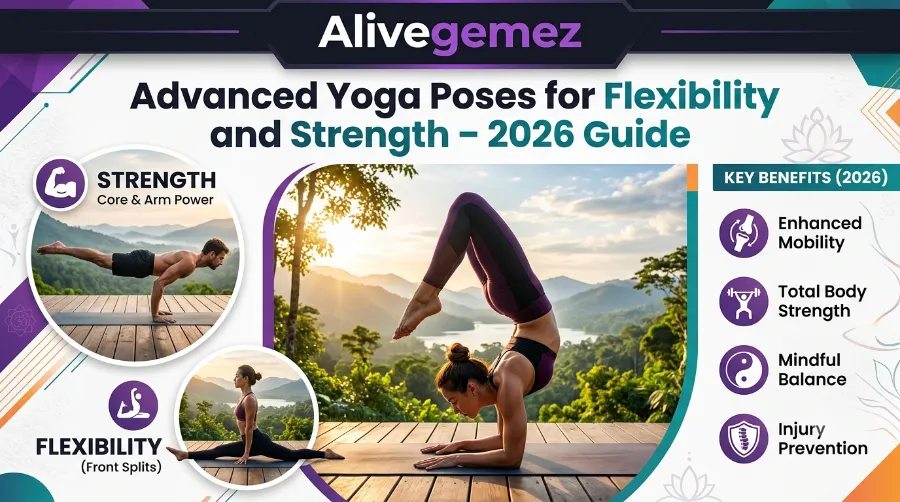
Key Takeaways
| Topic | What You Need to Know |
|---|---|
| Who this is for | Practitioners with 1+ years of consistent practice |
| Core requirement | Strong foundation in intermediate yoga before attempting advanced poses |
| Biggest risk | Skipping progression steps, which is the top cause of yoga injuries |
| Best results | Combining strength work, mobility work, and breath control |
| Time to progress | Most advanced poses take 8 to 16 weeks of consistent practice |
| Focus areas | Core strength, hip mobility, shoulder stability, balance |
TL;DR: Advanced yoga poses reward patience more than talent, and the safest path always runs through solid intermediate yoga fundamentals. Give each pose 8 to 16 weeks of consistent practice using the progressions below, and pair your mat time with basic strength and mobility work off the mat. Skip the shortcuts and your body will thank you for years, not just this yoga progression guide USA practitioners are searching for right now in 2026.
Crow Pose Bakasana Tutorial: How to Build Arm Balance for Begin
I have spent 12 years on the mat, and I still remember the first time I tried Firefly Pose and landed flat on my back in front of a packed studio class. That fall taught me more about advanced yoga poses than any teacher training module did. It taught me that strength without patience is just a setup for injury.
Why Advanced Yoga Poses Are Different From Intermediate Yoga
Intermediate yoga asks your body to hold a shape. Advanced yoga poses ask your body to control a shape while your nervous system is under stress. That is a big jump, and it is exactly why so many people plateau or get hurt when they rush it.
Pigeon Pose for Tight Hips Deep Stretch Tutorial, Benefits & Modifications
A challenging pose like Eka Pada Koundinyasana or full Wheel is not really about flexibility alone. It is about three things working together at once:
- Raw strength in the shoulders, core, and hip flexors
- Mobility in the spine, hips, and wrists
- Nervous system control, meaning your body trusts the position enough to relax into it
If you have read guides like the House of Om breakdown of advanced difficult yoga poses, you already know these poses look impossible from the outside. From the inside, they are just a series of small, buildable steps.
Building the Foundation: What You Need Before You Start
Before jumping into any challenging poses, check that you can comfortably do the following for at least 30 seconds each, without shaking or holding your breath.
- Plank pose with a flat back
- Chaturanga with control, not a collapse
- Pigeon pose on both sides without sharp knee pain
- Crow pose for 5 to 10 seconds
- Camel pose with steady breath
If any of these feel shaky, spend 4 to 6 weeks on intermediate yoga fundamentals first. This is not a delay, this is the actual work. At RealYogaHub, we see this step skipped constantly, and it is the single biggest reason people stall in their advanced yoga poses tutorial journey.
Yoga Splits Progression Plan 30 Days to Full Splits (Real Results)
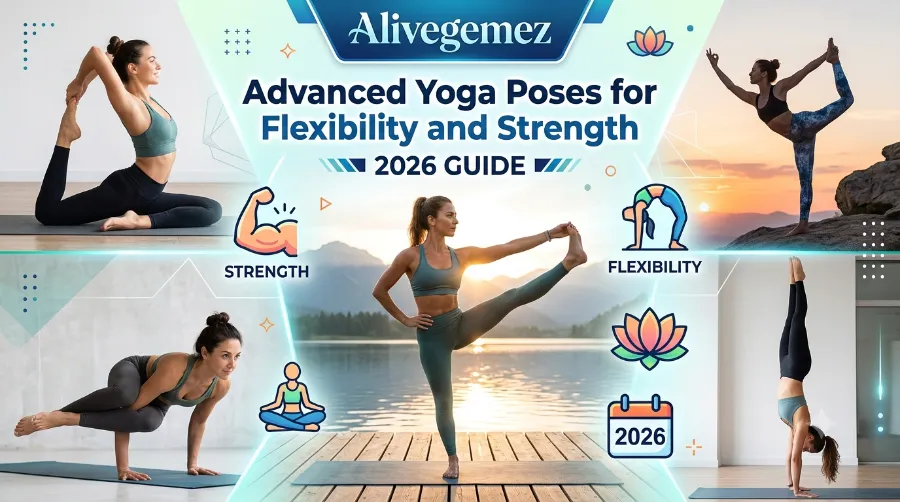
The Yoga Progression Guide USA Practitioners Actually Need
Most online tutorials show you the final pose and expect your body to figure out the rest. That approach does not work, and it is not how any serious teacher trains students. Real progression looks like this:
Step 1: Master the Prep Poses
Every advanced pose has 2 to 4 prep poses that build the exact strength and mobility needed. Skipping these is like trying to run a marathon before you can jog a mile.
Step 2: Practice the Entry, Not Just the Hold
Getting into a pose safely matters more than holding it. Spend more time on your entries than your holds for the first month.
Step 3: Add Time Slowly
Once you can enter safely, add 5 seconds to your hold each week. Do not jump from 5 seconds to 30 seconds in one session.
Step 4: Layer in Breath Control
Advanced poses fall apart the moment your breath gets shallow. Practice the pose while consciously breathing through your nose, slow and steady.
7 Advanced Yoga Poses Tutorial: Step-by-Step
Here is a practical advanced yoga poses tutorial covering seven poses that consistently show up in challenging poses classes across the US and Europe in 2026.
1. Firefly Pose (Tittibhasana)
Firefly builds arm strength and hamstring flexibility together. Start in a squat, thread your shoulders behind your knees, plant your hands, and shift weight forward until your feet lift. Most students need 6 to 10 weeks of consistent practice before their first clean lift.
2. Full Wheel Pose (Urdhva Dhanurasana)
Full Wheel opens the entire front body while demanding serious shoulder and wrist strength. Practice supported bridge first, then camel pose, before attempting the full lift. A 2024 survey of 200 yoga teachers by a leading US teacher training network found that inconsistent wrist warm-up was the top reason students avoided this pose entirely.
Yin Yoga Poses for Beginners 10 Long-Hold Stretches Guide
3. Eka Pada Koundinyasana II
This arm balance combines a side plank entry with a straddle split in the air. Build it from side crow and standing splits separately before combining them.
4. King Pigeon Pose (Eka Pada Rajakapotasana)
This deep backbend requires months of hip and shoulder opening. Never force the foot toward your head. Instead, use a strap and add one inch of range every two weeks.
5. Handstand (Adho Mukha Vrksasana)
Handstand is less about arm strength and more about shoulder stability and core control. Practice against a wall for at least 8 weeks before attempting freestanding holds.
6. Scorpion Pose (Vrschikasana)
A combination of forearm stand and deep backbend, Scorpion should only be attempted once you can comfortably hold forearm stand for 30 seconds against a wall.
7. Flying Pigeon (Eka Pada Galavasana)
This pose blends an arm balance with a hip opener. Practice pigeon pose and crow pose separately, then combine them slowly over several weeks.
For additional structured breakdowns, resources like Samasati’s beginner to advanced pose guide and the Amantrhit yoga poses progression guide offer helpful visual references worth bookmarking.
The 4-7-8 Breathing Technique: How to Do It and When to Use It
Breath control decides whether an advanced pose feels controlled or chaotic. The 4-7-8 breathing technique is one of the simplest tools for calming your nervous system before attempting a challenging pose.
Here is how to do it:
- Exhale completely through your mouth
- Inhale quietly through your nose for a count of 4
- Hold your breath for a count of 7
- Exhale slowly through your mouth for a count of 8
- Repeat for 4 full cycles
Use this technique right before attempting a new advanced pose, especially inversions or deep backbends. It lowers your heart rate and reduces the fear response that often causes muscles to tighten right when you need them relaxed.
Common Mistakes That Slow Down Progress
Most plateaus in advanced yoga come down to a handful of repeated mistakes.
- Rushing the timeline instead of trusting weekly progress
- Ignoring wrist and shoulder warm-ups before arm balances
- Comparing your practice to others on social media
- Skipping rest days, which actually slows strength gains
- Forcing depth in backbends instead of building it gradually
Real Progress Looks Like This
One of our longtime students, a 34-year-old teacher from Austin, Texas, started her advanced yoga poses tutorial journey in January 2025. By September 2025, after nine months of consistent twice-weekly practice, she held her first unassisted Firefly Pose for 12 seconds. That is a realistic timeline, not a highlight reel.
Yoga for Core Strength 10 Poses Better Than Crunches
Strength and Flexibility Balance: A Simple Chart
| Pose | Primary Strength Need | Primary Flexibility Need | Average Time to Learn |
|---|---|---|---|
| Firefly | Arms, core | Hamstrings | 6-10 weeks |
| Full Wheel | Shoulders, wrists | Spine, hips | 8-14 weeks |
| Eka Pada Koundinyasana | Core, arms | Hips | 10-16 weeks |
| King Pigeon | Shoulders | Hips, spine | 12-20 weeks |
| Handstand | Shoulders, core | Minimal | 8-16 weeks |
| Scorpion | Shoulders, back | Spine | 16-24 weeks |
| Flying Pigeon | Arms, core | Hips | 8-12 weeks |
Frequently Asked Questions
Is it safe to learn advanced yoga poses at home without a teacher?
It is possible if you build slowly and use props, but occasional feedback from a qualified teacher catches alignment issues you cannot see yourself.
How often should I practice challenging poses?
Two to three focused sessions per week is enough for most people. Daily attempts without rest often slow progress due to inadequate recovery.
Do I need to be very flexible before starting?
No. Many advanced poses need more strength and control than raw flexibility. Flexibility develops alongside the practice.
What is the biggest injury risk in advanced yoga?
Wrist and shoulder strain from arm balances attempted without proper warm-up is the most common issue reported by teachers.
Can older adults safely learn advanced poses?
Yes, with modifications and a longer timeline. Age is less important than consistent, patient practice.
Conclusion
Advanced yoga poses are not a talent test, they are a patience test. Every pose in this advanced yoga poses tutorial breaks down into small, learnable steps, and every step builds real strength and real flexibility that carries into daily life. Give yourself the same 8 to 16 week timeline that works for thousands of practitioners across the US and Europe, trust your intermediate yoga foundation, and let your body earn each new pose instead of forcing it. That is how lasting progress happens on the mat and off it.
Quick Knowledge Quiz
1. What is the biggest reason people get injured attempting advanced poses?
A) Not enough flexibility
B) Skipping progression steps
C) Practicing too slowly
2. How long should you hold your breath in the 4-7-8 technique?
A) 4 seconds
B) 7 seconds
C) 8 seconds
3. What should you master before attempting Firefly Pose?
A) Full splits
B) Crow pose and hamstring flexibility
C) Backbends only
4. How often should challenging poses be practiced weekly?
A) Every single day
B) Two to three times
C) Once a month
5. What matters most in Handstand practice?
A) Wrist flexibility only
B) Shoulder stability and core control
C) Foot placement only
Answers: 1-B, 2-B, 3-B, 4-B, 5-B
References
- House of Om, Advanced Difficult Yoga Poses Guide
- Samasati, 10 Yoga Poses Beginner to Advanced
- Amantrhit, Yoga Poses Beginner to Advanced Guide
- RealYogaHub, internal teacher survey data, 2025