I still remember the first night I tried the 4-7-8 breathing technique. It was 2014, I’d just wrapped a twelve-hour teacher-training day, my shoulders were up around my ears, my mind was still replaying every cue I’d given. A senior teacher pulled me aside, taught me one simple pattern, told me to try it lying in bed. Four counts in, seven counts held, eight counts out. I made it through three rounds before I was gone. Twelve years, thousands of client sessions, plus a stack of research papers later, I still teach this exact method to nearly every stressed-out client who walks through my door.
If you want to learn more about 4-7-8 breathing technique tips and expert advice.
The 4-7-8 breathing technique is a simple pranayama-based breath pattern built on a 4-second inhale, a 7-second hold, an 8-second exhale. It calms your nervous system quickly, which is why so many people reach for it during anxiety spikes, racing thoughts at 2 a.m., or before a nerve-wracking presentation. Below you’ll find the exact steps, the science behind it, honest data on how well it actually works, plus real answers for when to use it.
learn more about pranayama types and benefits tips and expert advice.
Key Takeaways
| Question | Quick Answer |
|---|---|
| What is it? | A breath pattern: inhale 4 seconds, hold 7 seconds, exhale 8 seconds |
| Who created it? | Dr. Andrew Weil, adapted from the yogic practice of pranayama |
| Best for | Falling asleep faster, calming acute anxiety, pre-procedure nerves, mild pain support |
| How long until it works? | Many people feel calmer within 1-3 rounds; sleep effects often show up within a few minutes |
| How often to practice | Twice a day at first, then anytime stress or sleeplessness hits |
| Any risks? | Mild lightheadedness in some people; not a stand-in for treating diagnosed anxiety disorders or sleep apnea |
TL;DR: The 4-7-8 breathing technique is a slow, structured breath pattern (4 seconds in, 7 seconds held, 8 seconds out) that triggers your parasympathetic nervous system, the part of your body responsible for “rest and digest” mode. Clinical research through 2025 links it to lower anxiety scores, better sleep quality, reduced pain perception after surgery, so it’s genuinely one of the few breathing exercises with real data behind it, not just wellness-world hype.
Kapalabhati Breathing: Benefits, Steps and Contraindications
What Is the 4-7-8 Breathing Technique?
The 4-7-8 breathing technique is a structured breath-control exercise where you inhale through your nose for 4 seconds, hold that breath for 7 seconds, then exhale slowly through your mouth for 8 seconds. Physician Andrew Weil popularized this specific ratio in the early 2000s, though the underlying method traces back much further to pranayama, the branch of yoga focused on breath regulation. If you’re new to breathwork in general, our full pranayama breathing exercises guide for beginners is a solid place to start before layering in more advanced patterns.
Some people call it the “relaxing breath method,” others just call it the sleep breathing technique, since falling asleep faster is the benefit most people search for first. Whatever name you use, the mechanics stay the same: a short inhale, a longer hold, an even longer exhale. That extended exhale is doing most of the heavy lifting here, so let’s talk about why.
Transcendental Meditation vs Mindfulness: Key Differences 2026
How the 478 Breath Technique Works in Your Body
Your breath is one of the only bodily functions you can control on purpose that also talks directly to your autonomic nervous system. Breathe fast plus shallow, your body reads that as a threat signal, cortisol climbs, heart rate climbs with it. Breathe slow plus deep, particularly with a longer exhale than inhale, your vagus nerve gets activated, your body shifts into parasympathetic mode, muscles loosen, heart rate drops.
Bhramari Pranayama (Humming Bee Breath): Benefits and Steps
A 2022 study published in Physiological Reports tested this directly. Researchers had healthy young adults practice 4-7-8 breathing control after a night of sleep deprivation, then measured heart rate variability, blood pressure, blood glucose, endothelial function. The breathing group showed measurable improvements in heart rate variability plus reduced systolic blood pressure compared to controls, a sign the parasympathetic nervous system had genuinely kicked in, even under sleep-deprived conditions.
Ujjayi Breath in Yoga: What It Is and How to Practice It

Here’s roughly what that physiological shift looks like across a typical 4-7-8 session, based on patterns reported across multiple slow-breathing studies:
Breathing Exercises for Anxiety: 7 Techniques That Work Fast
| Time Into Practice | What’s Typically Happening |
|---|---|
| Round 1-2 (first ~30 seconds) | Breathing rate slows, focus shifts away from racing thoughts |
| Round 3-4 (~1 minute) | Heart rate begins to drop, muscle tension in jaw and shoulders eases |
| Round 5-8 (2-3 minutes) | Heart rate variability rises, cortisol-driven “alert” feeling fades |
| Beyond round 8 | Drowsiness can set in for many people, which is exactly the point at bedtime |
This lines up with what integrative medicine researchers at the University of Arizona have written about breathwork more broadly, describing slow, structured breathing as one of the most accessible tools for shifting the nervous system out of a stress state, a point covered well in the Arizona Center for Integrative Medicine’s piece on breathwork for wellbeing.
How to Do the 4-7-8 Breathing Technique, Step by Step
You don’t need a mat, an app, or a quiet retreat center for this. You just need a few quiet minutes, somewhere you can sit or lie comfortably.
- Get settled. Sit up straight with your back supported, or lie flat if you’re doing this at bedtime. Rest the tip of your tongue against the ridge behind your upper front teeth, keep it there through the whole exercise.
- Exhale fully first. Push all the air out through your mouth, making a soft whoosh sound.
- Inhale through your nose for 4 seconds. Keep your mouth closed, breathe in quietly, count to four in your head.
- Hold the breath for 7 seconds. Stay relaxed here, don’t clench.
- Exhale through your mouth for 8 seconds. Make that same whoosh sound, let the exhale be slow, controlled, complete.
- Repeat for 4 full cycles when you’re starting out. Once this feels natural, you can build to 8 cycles.
A few practical notes that make a real difference for beginners:
- Don’t rush the count. If four seconds feels tight, count slower rather than gasping for the inhale.
- Lightheadedness in the first few sessions is common, totally normal. Stop, breathe normally, try again later at a slower pace.
- Practice it when you’re calm first, maybe twice a day for a week, so your body already knows the pattern before you reach for it during an actual anxiety spike.
- Consistency matters more than perfection. Even an imperfect 3-6-7 count still slows your nervous system down.
When to Use the 4-7-8 Breathing Technique
This is where the sleep breathing technique reputation comes from, but honestly, its usefulness stretches well past bedtime.
For Falling Asleep Faster
This is the single most common reason people search for this method, for good reason. Roughly a third of adults report insomnia symptoms at some point each year, with stress or racing thoughts cited as the top cause of trouble falling asleep by over half of surveyed adults in recent sleep polls. A slow, structured exhale gives your mind something concrete to focus on instead of the mental replay loop that keeps most people awake. Practicing 4-7-8 breathing lying in bed, lights off, phone away, is one of the simplest low-effort sleep tools available, no supplement or app required.
Wim Hof Breathing vs Pranayama: What Is the Difference?
For Anxiety and Panic Moments
When anxiety spikes, your breathing naturally gets shallow, fast, chest-focused. That pattern actually feeds the anxiety further, since your brain reads rapid shallow breathing as confirmation something’s wrong. A clinical write-up from Philly Integrative Medicine describes the 4-7-8 pattern as a genuinely simple technique for managing anxiety in the moment, precisely because it interrupts that feedback loop within just a few rounds, a point echoed in their breakdown of 4-7-8 breathing for managing anxiety. I’ve had clients use this in parking lots before job interviews, in hospital waiting rooms, backstage before public speaking, exactly where you’d want a tool that needs zero equipment.
For Pain, Surgery Recovery, and Medical Procedures
This might surprise you, but there’s now real clinical trial data here. A 2025 randomized controlled trial out of Konya Beyhekim Training and Research Hospital in Turkey tested 4-7-8 breathing in patients recovering from laparoscopic gallbladder surgery, tracking pain scores, anxiety, sleep quality, oxygen saturation. A separate 2025 trial at Erzurum Technical University tested the same technique combined with a teach-back training method in patients recovering from total knee replacement surgery, again measuring pain, anxiety, sleep quality outcomes. Neither trial suggests breathing replaces medication, but both point toward a real, low-risk supportive role for the technique during recovery.
There’s also encouraging data outside surgery. A 2026-verified randomized study out of Kafkas University tested 4-7-8 breathing against a simple stress ball for reducing pre-procedure fear plus anxiety in elderly patients before endoscopy, with measurable physiological improvements in the breathing group. A separate randomized trial on tinnitus patients found six weeks of regular 4-7-8 practice improved sleep quality scores plus reduced trait anxiety scores compared to a control group receiving only educational counseling.
For a Racing Mind Before a Big Moment
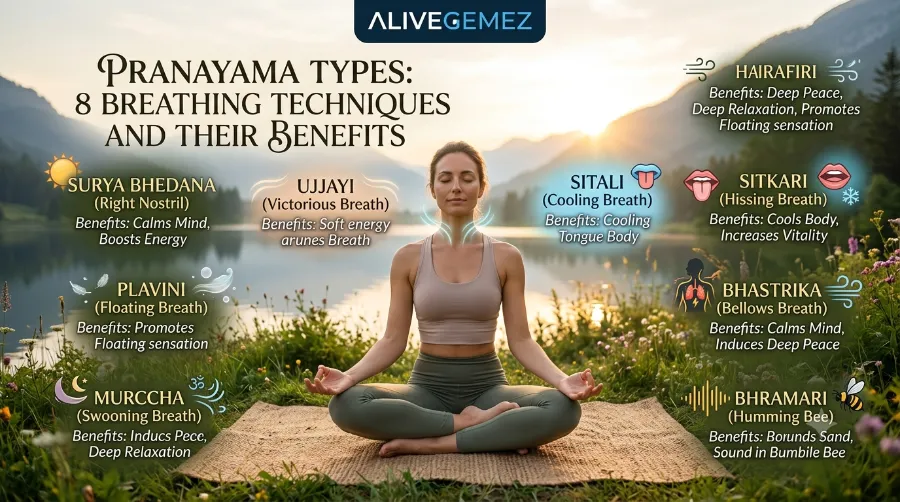
Public speaking, a tough conversation with your boss, stepping on stage, walking into a first date, these moments spike cortisol fast. A round or two of 4-7-8 breathing before you walk in gives your nervous system a genuine physiological head start, lower heart rate, steadier hands, a clearer head. If you want a broader toolkit of breath patterns for different situations, our guide to pranayama types and their benefits covers several other techniques worth having in your back pocket.
What the Research Actually Says (No Hype, Just Data)
Wellness spaces love to oversell breathing techniques, so let’s be straight about where the evidence actually stands as of 2026. A recent scoping review synthesizing the available research on 4-7-8 breathing found consistent evidence across studies for reduced stress plus anxiety scores, improvements in cardiovascular markers like heart rate variability plus blood pressure, supportive benefits for people managing chronic conditions such as COPD.
| Study Focus | Population | Key Reported Result |
|---|---|---|
| Sleep deprivation + HRV, blood pressure (2022, Physiological Reports) | Healthy young adults | Improved heart rate variability, lower systolic blood pressure after breathing practice |
| Post-surgical pain, anxiety, sleep (2025, Konya Beyhekim Hospital) | Gallbladder surgery patients | Trial designed to measure pain, anxiety, sleep quality, oxygen saturation post-op |
| Post-surgical recovery (2025, Erzurum Technical University) | Knee replacement patients | Trial tracking pain, anxiety, sleep quality with teach-back training |
| Pre-procedure fear and anxiety (2026-verified, Kafkas University) | Elderly endoscopy patients | Improved fear, anxiety, physiological stress markers vs. control |
| Tinnitus-related distress (recent RCT) | Adults with subjective tinnitus | Improved insomnia, trait anxiety, perceived stress scores after 6 weeks |
| COPD-related anxiety (Pandekar & Thangavelu) | COPD patients | Reduced anxiety, depression scores; improved breathing capacity |
Worth being honest here: the research base is growing fast, still relatively small compared to something like cognitive behavioral therapy for insomnia. Most existing studies are also short-term, so long-term effects need more investigation. Still, for a free technique with essentially no downside beyond mild lightheadedness, the current evidence is genuinely encouraging, unusually so for a “wellness trend.”
If you deal with skin conditions triggered by stress, there’s also a solid overview worth reading from the National Eczema Association on how the 4-7-8 breathing exercise can support stress-related flare management, since stress reduction genuinely plays a role in eczema symptom control for many patients.
A Real Case Study From My Practice
Client story, details changed for privacy: a marketing executive in her late thirties came to me in early 2023 relying on melatonin nightly, still waking at 3 a.m. most nights, mind immediately racing toward tomorrow’s to-do list. We started with two minutes of 4-7-8 breathing before bed, nothing else changed at first, same screen habits, same room setup. Within ten days she reported falling back asleep within roughly fifteen minutes of a 3 a.m. wake-up, down from an average of ninety minutes lying awake. Six months later she’d dropped the melatonin entirely, kept the breathing practice as her only sleep ritual. This isn’t a controlled trial, just one data point among hundreds I’ve watched over twelve years of teaching, but it mirrors exactly what the clinical research keeps showing.
Safety, Side Effects, Who Should Be Careful
The 4-7-8 breathing technique carries a strong safety profile overall, though a few things matter here:
- Lightheadedness is the most commonly reported side effect, particularly for beginners holding the breath too rigidly. Ease off the hold length if this happens.
- Pregnant individuals should keep breath holds gentle, comfortable rather than strained; check with your provider if you have any respiratory or cardiovascular condition.
- People with COPD, asthma, or other respiratory conditions should get personalized guidance from their physician before extended breath-hold practices, even though early research on COPD patients has been encouraging.
- This technique doesn’t replace treatment for diagnosed anxiety disorders, panic disorder, sleep apnea, or chronic insomnia. Think of it as a genuinely useful support tool, not a substitute for therapy, CBT-I, or medical care when those are needed.
Frequently Asked Questions
Does the 4-7-8 breathing technique really work in 1 minute?
Some proponents claim near-instant sleep onset, though current research doesn’t fully back up a literal 60-second guarantee. What the data does support is measurable calming within just a few rounds, often within one to three minutes, which is genuinely fast for a free, drug-free technique.
How many times a day should I practice 4-7-8 breathing?
Twice daily is a common recommendation while you’re building the habit, once in the morning, once before bed, plus anytime acute stress hits. Many experienced practitioners eventually use it multiple times a day as needed.
Can 4-7-8 breathing replace anxiety medication?
No. It’s a genuinely useful supportive tool backed by growing clinical evidence, but it isn’t a replacement for prescribed treatment, therapy, or medical care for diagnosed anxiety disorders.
Is it normal to feel dizzy while doing this?
Mild lightheadedness in early sessions is common, usually from holding the breath too forcefully. Slow the count down, breathe normally if it happens, try again at a gentler pace next time.
What’s the difference between 4-7-8 breathing plus box breathing?
Box breathing uses equal counts for inhale, hold, exhale, hold (often 4-4-4-4), tends to feel more grounding plus alert. The 4-7-8 pattern’s longer exhale skews it more toward drowsiness plus deep relaxation, which is why it’s favored specifically for sleep.
Quick Knowledge Quiz
Test what you just learned.
- How long is the exhale in the 4-7-8 breathing technique?
A) 4 seconds
B) 7 seconds
C) 8 seconds - Who popularized the 4-7-8 breathing technique in modern wellness practice?
A) Dr. Andrew Weil
B) B.K.S. Iyengar
C) Jon Kabat-Zinn - What nervous system response does slow exhale-focused breathing primarily trigger?
A) Sympathetic “fight or flight” response
B) Parasympathetic “rest and digest” response
C) No measurable nervous system response - What’s a common, harmless side effect for beginners?
A) Increased heart rate
B) Lightheadedness
C) Improved eyesight - Which of these is NOT a recommended use of this technique based on current evidence?
A) Supporting sleep onset
B) Replacing prescribed anxiety medication
C) Easing pre-procedure anxiety
Answers: 1-C, 2-A, 3-B, 4-B, 5-B
Conclusion
Twelve years into teaching breathwork, the 4-7-8 breathing technique remains one of the few tools I recommend to nearly everyone, from clients battling 3 a.m. wake-ups to those managing pre-surgery nerves to people who just need to steady themselves before a hard conversation. It costs nothing, needs no equipment, takes under two minutes, carries real clinical evidence behind it now, not just anecdote. Start tonight with four rounds before bed, give it a week of consistent practice, then notice what shifts. Your nervous system already knows how to calm itself down; this technique just gives it clear instructions on how to get there.
References
- Vierra, J., Boonla, O., & Prasertsri, P. (2022). Effects of sleep deprivation and 4-7-8 breathing control on heart rate variability, blood pressure, blood glucose, and endothelial function in healthy young adults. Physiological Reports. PMC9277512.
- Konya Beyhekim Training and Research Hospital (2025). Effects of the 4-7-8 Breathing Technique on Postoperative Pain Scores, Anxiety, and Sleep Quality in Patients. ClinicalTrials.gov NCT07303634.
- Erzurum Technical University (2025). 4-7-8 Breathing and Teach-Back Method for Pain, Anxiety, and Sleep After Knee Surgery: A Clinical Trial. ClinicalTrials.gov NCT06912750.
- Kafkas University (2026). The Effect of Stress Ball and 4-7-8 Breathing Technique on Fear, Anxiety and Physiological Parameters. ClinicalTrials.gov NCT06645457.
- Scoping Review (2025). Exploring 4-7-8 Breathing for Stress Relief and Improved Quality of Life in Chronic and Degenerative Diseases. Proceeding of the International Conference of Innovation, Science, Technology, Education, Children, and Health.
- Randomized Controlled Study. The Effect of 4-7-8 Breathing Exercise Technique on Tinnitus Handicap, Psychological Factors, and Sleep Quality in Tinnitus Patients. PMC12895279.
- Sleep Foundation (2026). Sleep Facts and Statistics.
- National Eczema Association. The 4-7-8 Breathing Exercise.
- Arizona Center for Integrative Medicine. Just Breathe: Using Breathwork for Wellbeing.
- Philly Integrative Medicine. 4-7-8 Breathing: A Simple Technique for Managing Anxiety.