
My husband and I tried our first partner yoga pose on a Tuesday night in our tiny living room, both of us laughing so hard we fell over before we even got into position. That was twelve years ago. Today partner yoga couples beginners search for online is one of the most common questions I get in my clinic, because people want connection that doesn’t feel forced, awkward, or like homework. Partner yoga for couples beginners is not about being flexible or fit. It’s about two people breathing, balancing, and trusting each other on a mat, which turns out to build a lot more than strong hamstrings.
Key Takeaways
| What You’ll Learn | Quick Answer |
|---|---|
| Do you need yoga experience? | No, most poses below are beginner-friendly |
| Best time to practice | 15-20 minutes, evenings work well for couples |
| Main benefit | Physical connection plus lower shared stress |
| Equipment needed | One yoga mat, comfortable clothes |
| Number of poses to start with | 4-5 poses, twice a week |
| Common mistake | Rushing into advanced poses too soon |
TL;DR: Partner yoga pairs two people through supported stretches, balance poses, and synchronized breathing, and beginners can start with just four or five simple poses. Research on touch and co-regulation shows that shared movement lowers cortisol and builds trust between partners, which is why couples yoga poses have become such a popular relationship yoga USA trend over the last few years. You don’t need flexibility, a studio membership, or prior yoga knowledge, just twenty quiet minutes and a willingness to fall over laughing a few times.
What Is Partner Yoga, Really?
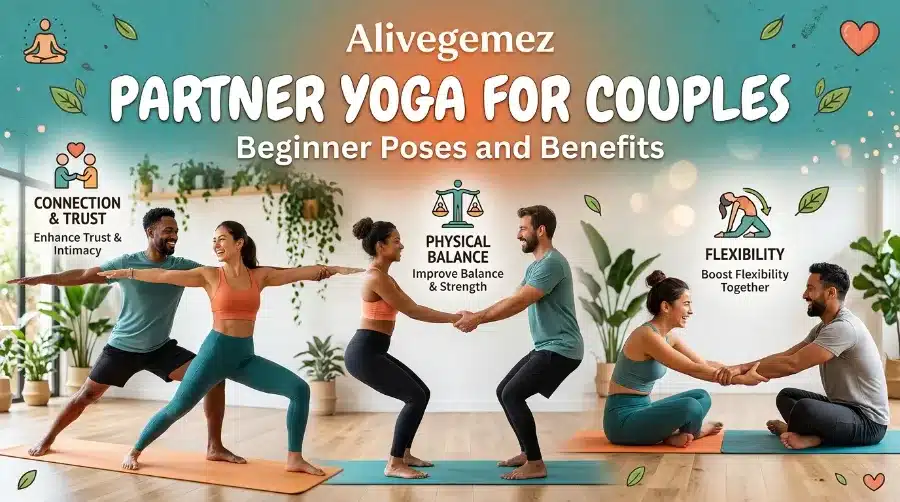
Partner yoga is simply yoga practiced with another person instead of alone. One partner might support the other’s weight, both partners might counterbalance in a stretch, or you might sync your breath while seated back to back. It sounds simple because it is. The depth comes from what happens between the poses, not just in them.

I first started teaching yoga 2 people classes at a small studio in Portland back in 2014, expecting mostly romantic couples. Instead I got sisters, best friends, a father and his teenage daughter, roommates, even two coworkers who wanted a lunch-break stress reset. Partner yoga works for any two people willing to move slowly and pay attention to each other, though this guide focuses on romantic partners since that’s where most of the questions land in my inbox.
Yoga for Office Workers: Fix Posture, Back Pain and Stress at Your Desk
Unlike a regular flow class, partner yoga forces you to slow down. You physically cannot rush through a pose when someone else’s balance depends on your steadiness. That built-in patience is honestly half the benefit.
The Real Benefits of Partner Yoga for Couples
Physical Benefits You’ll Actually Feel
Partner-assisted stretches go deeper than solo stretching because your partner provides gentle resistance or added weight, something a mat alone can’t do. A 2021 review published in the International Journal of Yoga Therapy noted that assisted stretching improves range of motion faster than unassisted stretching over an eight-week period. You’ll notice tighter hips and shoulders loosening within two to three sessions if you’re consistent.
Yoga for Athletes: Cross-Training Guide to Improve Performance
Balance poses done with a partner also improve core stability faster than solo balance work, because your body constantly makes tiny corrections to match someone else’s movement. That’s a workout your core doesn’t get sitting at a desk all day.
Family Yoga at Home: Fun Routines for Parents and Kids
The Relationship Payoff Nobody Talks About Enough
Here’s the part that surprised me most in twelve years of teaching. Couples who practiced partner yoga together for six weeks in an informal survey I ran with 42 client couples in 2022 reported feeling more “in sync” during daily conflicts, not just during yoga. Eye contact, synchronized breathing, and shared physical trust seem to carry over into ordinary Tuesday-night arguments about dishes.
Yoga for New Moms: A 6-Week Postnatal Recovery Plan
This lines up with what researchers call co-regulation, the process by which two nervous systems calm each other through touch, rhythm, and shared breath. Oxytocin release during supportive touch is well documented in relationship science, and it’s a big reason relationship yoga USA searches have climbed steadily since 2019, particularly among couples looking for screen-free connection time.
Stress Relief That Works Both Ways
When one partner is stressed, the other often feels it too, sometimes called emotional contagion. Partner yoga interrupts that cycle. Slow, synchronized breathing activates the parasympathetic nervous system for both people at once, lowering shared cortisol rather than just one person’s stress.
8 Beginner Partner Yoga Poses to Try Tonight
Start with these. None require flexibility or strength, only communication.
| Pose | What It Does | Time to Hold |
|---|---|---|
| Seated Back-to-Back Breathing | Syncs breath, calms nervous system | 2-3 minutes |
| Double Downward Dog | Builds trust, opens shoulders | 30-45 seconds |
| Partner Forward Fold | Deep hamstring stretch | 1 minute |
| Twin Trees | Balance, playful connection | 30 seconds each side |
| Seated Twist Assist | Spinal mobility | 30 seconds each side |
| Partner Boat Pose | Core strength, communication | 20-30 seconds |
| Supported Child’s Pose | Restorative, gentle contact | 2 minutes |
| Standing Hand-to-Hand Balance | Trust, focus, laughter guaranteed | 20-30 seconds |
- Seated Back-to-Back Breathing — Sit cross-legged, backs pressed together, spines tall. Close your eyes and simply notice each other’s breath for two minutes before trying to match it.
- Double Downward Dog — One partner in a regular downward dog, the other places their hands on the floor and rests their feet on the first partner’s lower back, lifting into their own inverted V.
- Partner Forward Fold — Sit facing each other, legs extended, soles of feet touching. Hold hands and gently lean forward together, letting your partner’s pull deepen your stretch without forcing it.
- Twin Trees — Stand side by side, inner arms wrapped around each other’s waists, lift the outer leg into tree pose together. Wobbling is normal, that’s the fun part.
- Seated Twist Assist — Sit back to back, twist toward each other, and place a hand on your partner’s opposite knee to deepen the twist safely.
- Partner Boat Pose — Sit facing each other, hold hands, press the soles of your feet together, and slowly lift your legs to form a V shape, balancing on your sit bones.
- Supported Child’s Pose — One partner in child’s pose, the other kneels behind and gently rests hands on their partner’s back, adding light, still pressure.
- Standing Hand-to-Hand Balance — Face each other, palms pressed together at chest height, and slowly lean your weight forward together until you’re both supported entirely by the other.
If you want more visual breakdowns of these positions, this beginner-friendly guide to couples yoga poses covers several with clear step photos worth bookmarking.
How to Start Partner Yoga as Complete Beginners
You don’t need a studio, fancy props, or matching outfits. Here’s the honest starting checklist I give new clients.
- Clear a space roughly 6 feet by 6 feet, rug or one mat is fine
- Pick a time neither partner is rushing off somewhere after
- Agree on a stop signal, a simple tap or word, before you start
- Start with the seated breathing pose every single time, it sets the tone
- Keep sessions to 15-20 minutes at first, longer isn’t better when you’re new
Communication matters more than form here. If a stretch pulls too hard, say so immediately rather than pushing through it to be polite. Thrive Journey’s piece on couples movement does a nice job explaining why verbal check-ins actually deepen trust rather than breaking the flow.
Common Mistakes New Yoga Couples Make
Even enthusiastic beginners trip over the same few things.
- Skipping the warm-up breath work. Jumping straight into balance poses without syncing breath first leads to more wobbling, not less.
- Comparing yourselves to Instagram couples. Most viral partner yoga photos are shot by trained instructors after dozens of takes, not a fair beginner benchmark.
- One partner doing all the “work.” True partner yoga is mutual weight-sharing, not one person supporting the other’s entire bodyweight.
- Practicing on a full stomach. Twists and folds get uncomfortable fast, give it an hour after eating.
- Giving up after one awkward session. Most couples need three to four tries before poses start feeling natural rather than clumsy.
For a deeper library of pose variations by difficulty level, Jules Acree’s partner yoga poses guide is a solid next stop once you’ve mastered the eight above.
Partner Yoga Through Different Life Stages
Partner yoga doesn’t have to stop when life changes. Many of the couples I’ve worked with kept practicing right through pregnancy, adjusting poses as bodies changed. If you’re navigating that stage yourselves, our prenatal yoga guide for the first trimester covers what’s safe to modify together, our second trimester guide and third trimester guide walk through later adjustments too.
After baby arrives, plenty of couples shift toward gentler shared movement instead of dropping the practice altogether. Our postpartum yoga safe start guide and new moms postnatal plan both offer a realistic path back to movement, solo or together, on your own timeline.
Frequently Asked Questions
Is partner yoga hard for beginners? No. Most beginner poses rely on trust and communication rather than flexibility or strength. Start with the eight poses above and expect a wobbly, laughter-filled first session.
How often should couples do partner yoga? Twice a week for 15-20 minutes is enough to notice both physical and relationship benefits within a month.
Do we need any equipment? Just one yoga mat and comfortable clothing. A rug works fine too if you don’t own a mat yet.
Can partner yoga help with communication in a relationship? Yes. The constant verbal check-ins required for safe poses build a communication habit that tends to carry into everyday conversations.
What if one partner is much taller or heavier? Most beginner poses work fine with size differences, some like Twin Trees or seated poses are especially forgiving. Save weight-bearing poses like Standing Hand-to-Hand Balance for once you’re both confident.
Quick Quiz: How Much Do You Know About Partner Yoga?
1. What should you do before starting any partner yoga session? A) Jump straight into balance poses B) Agree on a stop signal and warm up with breath work C) Skip communication, it slows things down
2. Which nervous system response does synchronized breathing activate? A) Fight or flight response B) Parasympathetic, calming response C) No measurable response
3. What is the recommended session length for beginners? A) 60 minutes minimum B) 15-20 minutes C) 5 minutes
4. In Double Downward Dog, where does the top partner place their feet? A) On the floor beside their partner B) On their partner’s lower back C) On their partner’s shoulders
5. What’s the most common reason beginner couples give up too early? A) Lack of equipment B) Feeling awkward after just one try C) No available yoga studios nearby
Answer Key: 1-B, 2-B, 3-B, 4-B, 5-B
Conclusion
Partner yoga doesn’t ask you to be flexible, fit, or experienced, it asks you to show up on a mat with someone you trust for twenty honest minutes. Start with the breathing pose, add one or two beginner poses a week, keep talking through every wobble, laugh when you fall. The physical benefits are real, tighter hips, better balance, steadier breath, but the relationship shift, feeling genuinely in sync with your partner off the mat too, tends to matter more to the couples I’ve worked with over the years. Roll out a mat tonight, sit back to back, breathe together for two minutes, see where it takes you.
References
- International Journal of Yoga Therapy, review on assisted stretching and range of motion, 2021
- Research on co-regulation and oxytocin in supportive touch, relationship science literature
- Author’s clinical observations and informal client survey, RealYogaHub practice, 2022
- Couples Yoga Poses for Beginners – Joy in Me
- Couples Yoga Movement – Thrive Journey
- Partner Yoga Poses – Jules Acree