
Hold a V-shape on your sit bones for thirty seconds, and your entire core starts shaking within ten. That shake is not a sign you’re doing something wrong. It’s your deep core muscles waking up, often for the first time in months. This boat pose navasana tutorial breaks down exactly why that happens, how to build the pose safely, and which variations actually match your fitness level today.
Table of Contents
ToggleNavasana, commonly called boat pose, is one of the most efficient core exercises in the entire yoga tradition. Unlike crunches, which mostly hit the surface abs, boat pose forces your rectus abdominis, obliques, hip flexors, and spinal stabilizers to fire together at once. Because of that combined demand, a well-cued boat pose can replace three separate ab exercises in your routine.
Yin Yoga Poses for Beginners 10 Long-Hold Stretches Guide
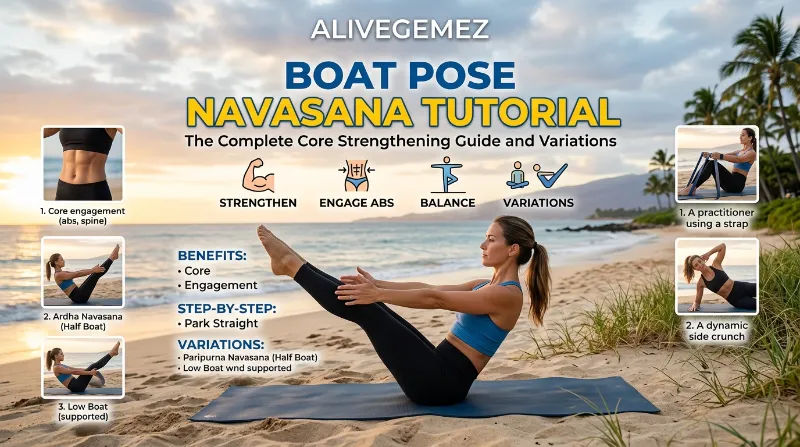
Below you’ll find the exact alignment cues we teach in-studio, the research behind why this pose works so well, safe modifications for bad backs or tight hips, and five variations that scale from total beginner to advanced practitioner. If you’re building a full core practice, this pairs well with our guide to yoga core strength poses.
Key Takeaways
| What You’ll Learn | Quick Answer |
|---|---|
| What boat pose is | A seated, V-shaped balance pose that strengthens the entire core in one hold |
| Main muscles worked | Rectus abdominis, hip flexors, obliques, transverse abdominis, lower back |
| Ideal hold time for beginners | 10-15 seconds, building to 60 seconds over 6-8 weeks |
| Who should modify | Anyone with low back pain, pregnancy, or hip flexor strain |
| Best variation to start with | Half Boat Pose (Ardha Navasana) with bent knees |
| Research finding | Boat pose activates trunk flexors above 50% MVC, higher than a standard plank |
TL;DR
Boat pose (navasana) is a seated core hold that strengthens your abdominals, hip flexors, and lower back faster than most standing poses. Start with bent knees and short holds, build up slowly, and modify if you feel strain in your lower back or neck. Research backs this up. A muscle activation study found navasana engages trunk flexors more intensely than a standard plank, which is exactly why it burns so fast.
What Is Boat Pose (Navasana) and Why It Belongs in Your Practice
Navasana comes from the Sanskrit word “nava,” meaning boat. Picture a small rowboat balanced perfectly on water, and you have the shape of the pose: hips as the base, torso and legs lifted into a V, arms reaching forward like oars.
What makes this different from a plank or a sit-up is the isometric hold. You’re not moving through a range of motion. You’re holding a static position while your body fights gravity from two directions at once, the upper body pulling one way, the legs pulling the other. That’s precisely why your abs shake so quickly, and why even fit people struggle to hold it past 30 seconds the first time they try.
This tutorial covers full boat pose plus its most useful variations, so pick the version that matches where your body is today rather than forcing the full expression on day one.
The Real Science Behind Boat Pose (Not Just Yoga Folklore)
Most articles on navasana repeat the same “it strengthens your core” line without backing it up. So we went looking for the actual research, and the data is more convincing than most yoga marketing.
A 2023 electromyography study published in ScienceDirect measured muscle activation across 16 different yoga poses commonly prescribed for low back pain. The results showed trunk flexor activation was significantly higher during boat pose, above 50% of maximum voluntary contraction, compared to roughly 30% for a standard plank. In plain terms, your abs work harder in navasana than they do in a plank, in less time.
A separate analysis on Yoganatomy summarizing multiple EMG studies found that transverse abdominis and rectus abdominis activation was consistently highest in boat pose compared to plank and standing backward-sway poses. The reverse boat variation showed the highest activation of the erector spinae, the muscles running along your spine, which explains why that variation feels so different in your lower back.
A graduate research study from the University of Wisconsin-La Crosse compared navasana against nine other common ab exercises, including the bicycle crunch, decline bench curl-up, and captain’s chair. Boat pose was classified alongside the front plank as one of the few truly isometric exercises in the group, meaning your rectus abdominis has to maintain constant contraction just to keep you balanced.
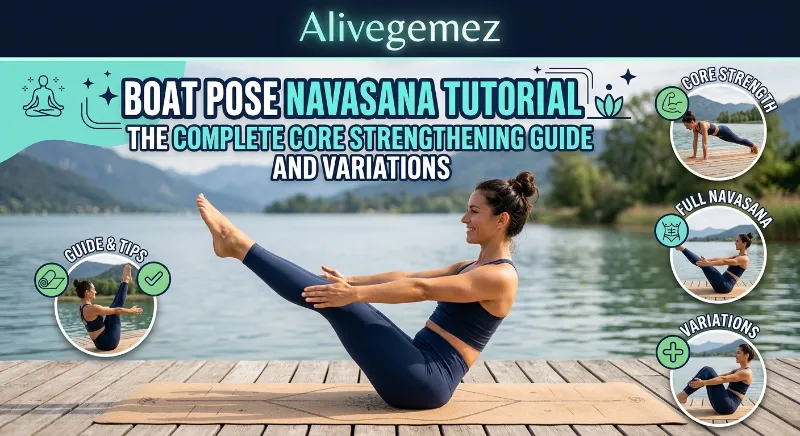
Chart 1: Core Muscle Activation by Pose (approximate % of Maximum Voluntary Contraction)
| Pose | Trunk Flexor Activation |
|---|---|
| Boat Pose (Navasana) | 50%+ |
| Front Plank | ~30% |
| Reverse Boat Pose (Erector Spinae) | ~42% |
| Standing Backward Sway | Lower than Boat |
(Data drawn from EMG research on yoga poses for chronic low back pain, ScienceDirect, 2023. Recreate this table as a bar chart in your CMS for a stronger visual on desktop and mobile.)
That combination, high abdominal demand plus spinal stabilization, is exactly why physical therapists sometimes include modified boat pose in low back rehab programs, though always under supervision and never during an acute flare-up.
How to Do Boat Pose Navasana: Step-by-Step Tutorial
Follow these steps slowly the first few times. Rushing into the full pose is the single biggest reason people strain their neck or lower back.
- Sit on your mat with knees bent, feet flat on the floor, hands placed slightly behind your hips for support.
- Lean back slightly from your hips, keeping your spine long rather than rounding through your lower back.
- Lift your feet off the floor until your shins are roughly parallel to the ground. This is half boat pose, and it’s a completely valid stopping point.
- Engage your lower abs by drawing your navel toward your spine before you lift any further.
- Straighten your legs to a 45-degree angle if your hamstrings and core allow it, keeping your chest lifted rather than collapsing forward.
- Extend your arms forward, parallel to the floor, palms facing each other, once your balance feels stable.
- Hold for 10 to 30 seconds, breathing steadily rather than holding your breath.
- Release with control by bending your knees and lowering your feet back to the floor.
A quick cue we give every student: your chest should stay proud and open throughout the hold. The moment your upper back starts to round, that’s your body telling you to bend your knees or lower your legs slightly.
Common Mistakes That Sabotage Your Navasana
Even experienced practitioners fall into these patterns. Watch for them:
- Rounding the lower back instead of hinging from the hips, which shifts strain away from the abs and onto the spine.
- Straining the neck forward to compensate for weak core engagement, a habit that shows up almost immediately in mirror-based classes.
- Holding the breath during the hold, which spikes blood pressure and makes the pose feel far harder than it needs to be.
- Skipping the bent-knee version entirely, which is often why beginners quit the pose in the first week rather than building toward it.
- Locking the neck by staring at the ceiling, which pulls tension into the cervical spine instead of the core where it belongs.
Navasana Variations for Every Level
Not every body is ready for full boat pose on day one, and that’s completely normal. Here are five variations worth building into rotation, ranging from supported beginner options to advanced core challenges.
1. Half Boat Pose (Ardha Navasana)
Knees stay bent, shins parallel to the floor. This is the smartest entry point for anyone new to core work, or returning after injury.
2. Supported Boat Pose
Hands stay planted on the floor beside your hips for extra stability while you build balance and confidence.
3. Full Boat Pose (Paripurna Navasana)
Legs fully extended, arms parallel to the floor. This is the classic full expression most tutorials show first, though it should come after the earlier versions feel solid.
4. Twisting Boat Pose
Add a slow torso rotation from side to side while holding the V-shape, which increases oblique activation significantly. This pairs naturally with the strength you’ll build practicing crow pose (bakasana), since both poses demand serious core-to-arm coordination.
5. Reverse Boat Pose
A prone variation that shifts emphasis toward the erector spinae, the muscles running along your spine, based on the EMG data referenced above. This is a smart addition for anyone building total core balance rather than just front-body strength.
If you’re progressing toward more demanding balance poses like headstand, a strong navasana practice builds the exact core stability you’ll need. Our guide to headstand for beginners walks through that progression step by step.
Who Should Modify or Avoid Boat Pose
Boat pose is generally safe for healthy adults, but certain situations call for caution.
- Low back pain or disc issues: Stick with half boat pose, or skip the pose entirely during flare-ups. Speak with a physical therapist before adding it to a rehab plan.
- Pregnancy: Deep core compression poses are typically avoided after the first trimester. Check with your OB-GYN or a prenatal yoga instructor first.
- Hip flexor strain: If you feel sharp hip pain rather than muscle fatigue, back off to the supported version.
- Neck tension or cervical issues: Keep your gaze slightly downward rather than straight ahead to avoid extending the neck under load.
According to yoga participation data from Statista, yoga participation levels in the United States surpassed 34 million people in 2023, a considerable increase over the previous decade, which means a huge range of bodies, ages, and fitness histories are practicing poses like this one every single day. Modifications aren’t a failure. They’re what keeps a strong practice sustainable for years instead of weeks.
Building Navasana Into a Real Core Routine
A single boat pose hold won’t transform your core on its own, in the same way one plank won’t. What works is consistency stacked with pose variety.
A simple weekly structure that works well for most students:
- Monday: 3 rounds of half boat pose, 20-second holds
- Wednesday: Full boat pose paired with pigeon pose for tight hips to balance strength with mobility
- Friday: Twisting boat pose plus reverse boat pose for full 360-degree core coverage
If you want a broader library of advanced postures to progress toward once navasana feels stable, our advanced yoga poses tutorial is the natural next step. And if you’d rather browse the full RealYogaHub library first, our homepage is the best starting point.
Chart 2: U.S. Yoga Growth (Participants, in Millions)
| Year | Estimated Participants |
|---|---|
| 2014 | ~20 million |
| 2023 | 34 million+ |
| 2025 | Continued growth, driven by strength-focused practice |
(Source: Statista, SFIA yoga participation data. Turn this into a simple line chart in your CMS for a strong visual anchor near the top of the article.)
Growth like this lines up with a broader shift researchers have noted: more people are coming to yoga specifically for strength and core work, not just flexibility, which is exactly the audience this tutorial is written for.
Frequently Asked Questions
Is boat pose good for abs?
Yes. Research shows trunk flexor activation in boat pose exceeds 50% of maximum voluntary contraction, higher than a standard plank, making it one of the more efficient ab holds in a yoga practice.
How long should beginners hold boat pose?
Start with 10 to 15 seconds using bent knees, then build toward 30 to 60 seconds over six to eight weeks as your core strength develops.
Does boat pose help lower back pain?
Modified versions are sometimes used in rehab settings, but always under professional guidance. Full boat pose can aggravate an already strained lower back, so half boat pose is the safer starting point.
What’s the difference between boat pose and a sit-up?
A sit-up moves through a range of motion, while boat pose is a static, isometric hold. That isometric demand is part of why it fatigues the core so quickly.
Can I do boat pose every day?
Most students do well with 3 to 4 sessions per week, allowing the core muscles recovery time in between, the same principle that applies to strength training for any muscle group.
Quick Knowledge Check: Boat Pose Quiz
1. What Sanskrit word does “Navasana” come from?
A) Nava, meaning boat
B) Nava, meaning wave
C) Vasana, meaning strength
2. According to EMG research, how does boat pose compare to a standard plank for trunk flexor activation?
A) Lower activation than plank
B) Roughly the same as plank
C) Higher activation than plank
3. What is the recommended starting variation for beginners?
A) Full boat pose with straight legs
B) Half boat pose (Ardha Navasana) with bent knees
C) Twisting boat pose
4. Which pose variation emphasizes the erector spinae muscles most, based on research?
A) Supported boat pose
B) Reverse boat pose
C) Full boat pose
5. What is the most common mistake practitioners make in boat pose?
A) Holding the breath and rounding the lower back
B) Holding the pose too briefly
C) Keeping the chest lifted
Answer Key: 1-A, 2-C, 3-B, 4-B, 5-A
Conclusion
Boat pose earns its reputation as one of the hardest-working core poses in yoga, and the research backs that up rather than just repeating tradition. Start with half boat pose, build your hold time gradually, and pay close attention to your lower back and neck alignment along the way. Progress here isn’t about forcing the full expression early. It’s about building a core strong enough to support the rest of your practice, from crow pose to headstand and everything beyond.
References
- Electromyographic analysis of trunk and hip muscles during Yoga poses prescribed for treating chronic low back pain. ScienceDirect, 2023.
- Core muscle function during specific yoga poses. ScienceDirect.
- Do Yoga Postures Engage The Abdominals And Hip Muscles? Yoganatomy.
- University of Wisconsin-La Crosse Graduate Studies, EMG analysis of abdominal exercises including yoga boat pose.
- Yoga Participation Statistics, Statista, 2025.
- Yoga Journal: Full Boat Pose
- Yoga International: Boat Pose
- Uptown Yoga: Navasana Boat Pose Steps and Benefits