
If you’ve ever stepped onto a yoga mat after a brutal day and felt your shoulders drop, you already know something is happening in your body. This isn’t just a feeling. Yoga lowers cortisol, your body’s main stress hormone, and scientists can now measure exactly how.
I’ve taught yoga for twelve years and studied the physiology behind it. Cortisol is the topic students ask about most. So let’s skip the fluff and look at what’s actually happening in your bloodstream when you practice.
Key Takeaways
| What You’ll Learn | The Short Answer |
|---|---|
| Does yoga really lower cortisol? | Yes. Multiple controlled studies show measurable drops. |
| How fast does it work? | Some changes appear within a single 60-minute session. |
| Which mechanism matters most? | Vagus nerve activation calms the HPA axis. |
| Best styles for cortisol reduction | Restorative, Hatha, and slow-flow beat high-intensity styles here. |
| How much practice is needed | Most people see benefits after 3–5 sessions a week. |
TL;DR: Yoga lowers cortisol mainly through slow breathing and mindful movement. These activate your vagus nerve. The vagus nerve then sends a calming signal to your HPA axis, the system that controls your adrenal glands. Studies show cortisol drops after single sessions and after weeks of steady practice. The effect grows stronger the more often you show up.
What Cortisol Actually Does In Your Body
Cortisol gets a bad reputation. It isn’t the villain people make it out to be. Your adrenal glands produce it, and it regulates blood sugar, blood pressure, inflammation, and your sleep-wake cycle. In short bursts, cortisol is the reason you can sprint across a street to dodge a car.
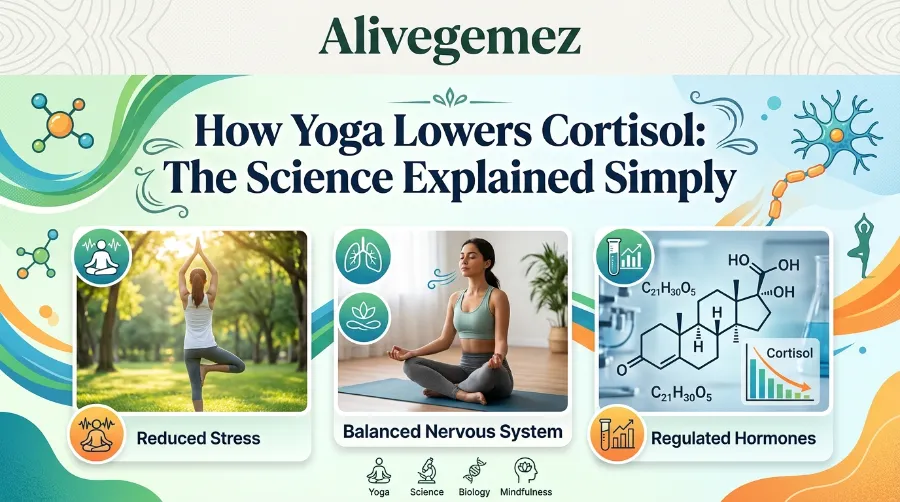
Problems start when cortisol never switches off. Chronic elevation is linked to abdominal weight gain, weakened immunity, memory fog, and disrupted sleep. Work stress, poor sleep, and constant low-grade anxiety all keep cortisol elevated. This is the backdrop for the growing research on yoga stress hormone regulation.
Yoga and Intermittent Fasting: Is This Combo Actually Safe?
How Yoga Lowers Cortisol: The Science Explained Simply
Here’s where it gets genuinely interesting. This is where the yoga cortisol reduction story stops sounding like wellness marketing and starts sounding like physiology.
The HPA Axis Is the Real Target
Your hypothalamus, pituitary gland, and adrenal glands form a loop called the yoga HPA axis. This loop, not cortisol alone, is what yoga actually influences. When you’re stressed, your hypothalamus signals your pituitary. Your pituitary signals your adrenals. Your adrenals release cortisol. Yoga interrupts this chain early, before cortisol floods your system.
Researchers pooled data from many yoga and mindfulness-based stress reduction trials in one meta-analysis. Yoga postures were tied to lower evening and waking cortisol. They also improved blood pressure, heart rate, and metabolic markers. That’s not one small study. That’s a pooled analysis across dozens of trials, about as close to settled science as this field gets.
Breath Is the Fastest Lever You Have
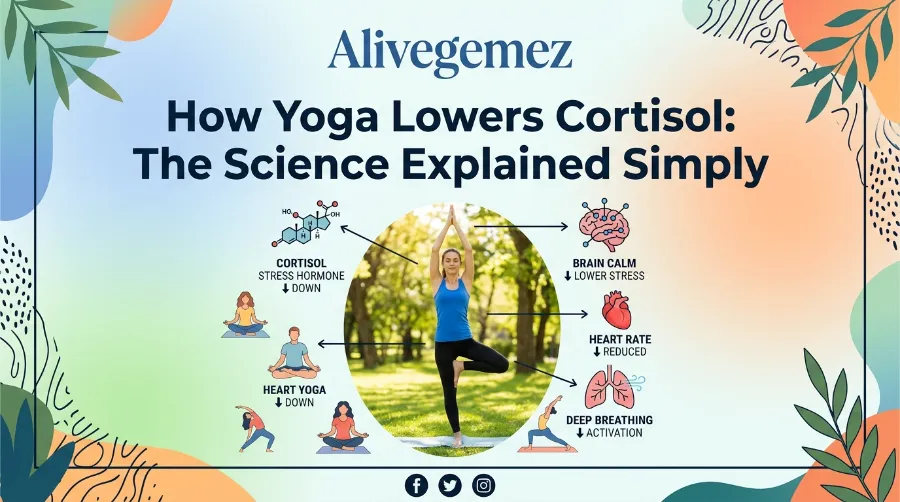
Slow, deep nasal breathing stimulates something called the carotid sinus baroreflex. This reflex runs through the vagus nerve. It signals your HPA axis to reduce cortisol output. Researchers have measured this change within a single 60-minute yoga session.
This fast response explains why breath-first practices work so quickly. It’s also the exact mechanism behind the 4-7-8 breathing technique, which uses an extended exhale to trigger this vagal response on purpose. Try pairing it with your yoga practice. Most people feel the calming effect within a few rounds.
The Original Study That Started This Conversation
Researchers at Thomas Jefferson Medical College and the Yoga Research Society ran one of the earliest cited studies here. Sixteen healthy new yoga practitioners took a daily 50-minute yoga class for seven days. On a separate control day, they sat quietly instead. The sitting day produced no real cortisol change beyond the body’s normal late-morning dip. The yoga days told a different story.
What The Research Actually Shows
Let’s put real numbers next to these claims. “Yoga is calming” isn’t the same thing as evidence.
One study in the Journal of Clinical and Diagnostic Research tracked morning cortisol in yoga practitioners versus non-practitioners. Practitioners showed nearly a 10 percent drop. This suggests yoga helps reset the HPA axis rather than just lifting your mood temporarily. Other reviews of randomized controlled trials report even bigger drops, sometimes 15 to 30 percent among regular practitioners. Results shift depending on the style, the duration, and how consistently people practiced.
Yoga for Grief and EmotionalHealing: A Gentle Guide
The chart below shows this range. Study design and practice consistency both explain most of the spread. But notice something important: the direction never flips. Every serious trial points the same way. Down.
Harvard’s health team studied something different: a three-month yoga retreat combining postures, breathwork, and seated meditation. Researchers found reduced inflammation and decreased cortisol. They also found BDNF levels tripled. BDNF is a protein tied to brain health and resilience. This matters more than people realize. Chronically high cortisol is linked to memory problems. Yoga may protect against that too, not just calm you down in the moment.
Which Yoga Styles Actually Lower Cortisol Best
Not all yoga works the same way here. A lot of blog posts stay vague on this point, so let’s not.
- Restorative and yin yoga produce the fastest breath-driven vagal response. Choose these if stress hormone regulation is your main goal.
- Hatha yoga shows steady, moderate cortisol reduction across multiple trials. It’s also the most studied style for this outcome.
- Slow vinyasa flow blends movement with breath control. Pick this if you want strength benefits alongside stress relief.
- Ashtanga and power yoga reduce cortisol too, but the effect may be smaller relative to the intensity. Vigorous practice often raises cortisol first, then drops it afterward.
- Hot yoga works differently. Heat causes a temporary cortisol spike as a survival response. With consistent practice, your nervous system adapts. It shifts into a parasympathetic state more efficiently after class. Read the heat-specific cortisol research for the full picture.
Start gentle if stress hormone regulation is your priority, not fitness. You can always add intensity once your baseline stress response settles down.
A Simple At-Home Routine You Can Start Tonight
You don’t need 90 minutes or a studio membership for a real cortisol benefit. Here’s a version I give overwhelmed students who need something realistic.
- Sit or lie down for two minutes. Do the 4-7-8 breath: inhale for 4 counts, hold for 7, exhale for 8. This starts the vagal shift immediately.
- Move into Child’s Pose for one minute. Rest your forehead down. Breathe slowly into your lower back.
- Flow through Cat-Cow for eight to ten rounds. This releases tension along your spine.
- Hold a supported Bridge Pose for two minutes. Let your chest open. Let your breath deepen.
- Finish in Legs-Up-The-Wall or a seated forward fold for three to five minutes. Keep your phone out of reach.
For a longer, fully guided version, check our guide to yoga stress-relief poses. It includes a full 20-minute sequence with modifications for different fitness levels.
When Cortisol Overlaps With Something Bigger
Cortisol regulation isn’t just about everyday stress. It intersects with several conditions readers and students ask me about constantly.
If racing thoughts or panic define your days, the vagal mechanism above plays a central role. Our piece on yoga for anxiety and panic attacks covers this in depth. If low mood is part of your picture, HPA axis dysregulation ties directly into depression. Our research roundup on yoga and depression walks through the evidence. Anyone carrying trauma needs a gentler, more careful approach to cortisol work. That’s exactly why we wrote a dedicated trauma-sensitive yoga guide.
Sleep and cortisol stay tightly linked too. Cortisol should dip naturally in the evening and rise in the morning. When that rhythm breaks, our four-week yoga insomnia plan helps restore it. If restlessness and focus feel like the bigger struggle, cortisol dysregulation often shows up as attention trouble. Our yoga for ADHD and focus piece addresses this directly. Anyone moving through loss should know that grief itself is a major cortisol trigger, something people rarely discuss openly. We cover it fully in our piece on yoga and grief.
One question comes up often: does fasting interfere with yoga’s cortisol benefits? It can, if you approach it poorly. That’s why we wrote a full breakdown on whether intermittent fasting and yoga are safe together.
For the bigger picture connecting all of this to your overall mental health, start with our pillar guide on yoga and mental health benefits.
A Real Case From My Own Teaching
A 41-year-old client came to me a few years ago after months of disrupted sleep and constant low-grade anxiety from a demanding job. We started small: ten minutes a day, just 4-7-8 breathing plus three restorative poses. Nothing intense. By week three, she fell asleep faster. She also felt less reactive during stressful meetings.
This isn’t a controlled trial, obviously. But it mirrors exactly what the research above predicts. I see this pattern most often in people who commit to a short daily practice rather than one long weekly class.
Want the broader picture on movement, breath, and mental health beyond cortisol specifically? This overview on the mind-body connection covers it well. For a deeper look at the physiology of stress and yoga, read this breakdown of the science behind yoga as a stress reliever. It covers mechanisms we didn’t have room for here.
Frequently Asked Questions
Does yoga lower cortisol immediately, or only over time?
Both. Single sessions trigger measurable drops through vagal activation. Bigger, more stable changes come from weeks of consistent practice.
How often do I need to practice to see a cortisol benefit?
Most research showing real HPA axis change involved 3 to 5 sessions per week. Shorter daily sessions still help if you stay consistent.
Is hot yoga better or worse for cortisol than regular yoga?
It’s not that simple. Heat spikes cortisol temporarily. But regular practice trains your body to recover faster afterward.
Can yoga replace medication for high cortisol or chronic stress?
No. Yoga works well as a complementary tool. It shouldn’t replace medical treatment when cortisol dysregulation is severe or has an underlying cause.
What’s the fastest way to lower cortisol through yoga?
Slow breathing with an extended exhale works fastest. The 4-7-8 technique directly stimulates the vagus nerve, so most people feel it within minutes.
Conclusion
Yoga lowers cortisol through a specific, measurable pathway, not vague relaxation. Your vagus nerve and your HPA axis do the real work. The research is consistent enough now that this isn’t a fringe wellness claim anymore. It’s a well-documented physiological response. Skip the search for a “perfect” style or the longest possible class. Show up consistently. Breathe on purpose. Give your nervous system the repeated signal that it’s safe to stand down.
References
- Yoga Journal, “Control Stress & Cortisol Levels with Yoga,” yogajournal.com
- Habuild, “How Yoga Lowers Cortisol: The Science of Stress and Yoga,” habuild.in
- ScienceDirect, “Yoga, mindfulness-based stress reduction and stress-related physiological measures: A meta-analysis,” sciencedirect.com
- Harvard Health Blog, “Yoga could slow the harmful effects of stress and inflammation,” health.harvard.edu
- SustainablySingle, “Yoga’s Science-Backed Benefits: Lower Stress & Cortisol,” sustainablysingle.com
- Hugger Mugger / Yoga Design Lab, “Does Hot Yoga Lower Cortisol?”