
If you are standing at the edge of your yoga mat wondering whether your body can still do this, I want you to hear something first: it can. A solid yoga beginners over 50 plan is not about touching your toes or folding into a pretzel. It is about breath, balance, and building strength in a body that has already lived a full life. I have taught this exact age group for over a decade, and the transformation I watch happen in the first eight weeks still surprises me every time.
Key Takeaways at a Glance
| What You’ll Learn | Quick Answer |
|---|---|
| Is yoga safe to start after 50? | Yes, for most people, especially with a doctor’s clearance and beginner-friendly poses |
| Best style to start with | Gentle Hatha, chair yoga, or restorative yoga |
| How often to practice | 2-3 sessions weekly, 20-30 minutes each, to start |
| Main benefit backed by research | Up to 34% reduction in fall risk with regular practice |
| Equipment needed | A mat, a sturdy chair, and one or two yoga blocks |
| Time to feel a real difference | 4-6 weeks of consistent practice |
TL;DR: Yoga after 50 works best when you start slow, choose gentle styles like chair yoga or beginner Hatha, and practice two to three times a week. Research from 2025 and 2026 shows measurable gains in balance, flexibility, and fall prevention within weeks. This guide gives you a full four-week starter plan, the safest poses, and the mistakes to avoid.
Yoga for Gamers The Real Posture Fix for Wrist Pain and Eye Strain
Why Yoga After 50 Actually Works in Your Favor
Here is something nobody tells beginners: your body at 50, 60, or 70 is not working against you in yoga. It is actually a great time to start, because yoga rewards patience and body awareness, two things most of us only develop with age.
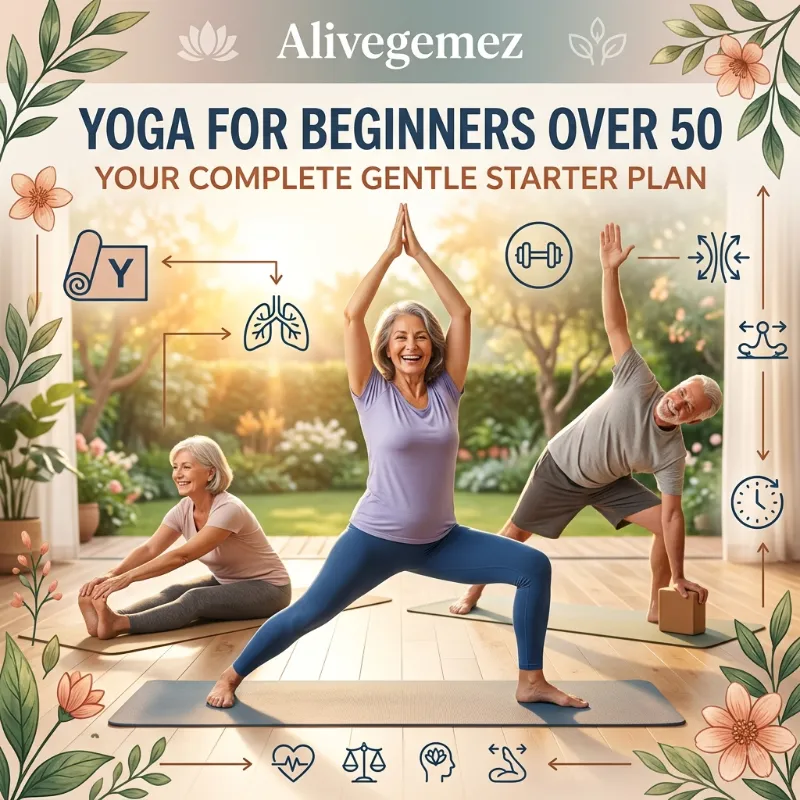
A 2025 systematic review found that regular yoga practice was linked to a 34% reduction in fall incidence among older adults, a result comparable to the best physical therapy programs. That is not a small number. Falls are one of the leading causes of injury and lost independence after 65, so a gentle gentle yoga older adults routine is doing real preventive work, not just helping you feel relaxed. Nature
Research out of the University of Edinburgh reviewed 22 separate studies and found consistent improvements in muscle strength, balance, and flexibility among older adults who practiced yoga, along with better sleep quality, vitality, and reduced symptoms of depression. A 2026 review in the Journal of Ageing and Longevity noted that yoga is generally well tolerated by older adults, with high adherence and few serious adverse events, though safety depends on proper modifications like chair support, wall assistance, and slow transitions. MDPI
Yoga for Osteoporosis Safe Poses and What to Avoid
Even the intensity data is encouraging. A 2025 study using heart rate monitors on adults averaging 70 years old found that hatha yoga sessions naturally reached moderate-intensity exercise levels for a meaningful portion of class time, without anyone pushing themselves into anything dangerous. Your heart and muscles are working, just without the joint strain of running or high-impact classes.
A Quick Note From My Own Studio
I remember a student named Carol, who joined my Tuesday morning class in early 2023 at age 63, six months after a knee replacement. She could not sit on the floor at all in her first class. By week ten, she was holding a modified Warrior II with a chair for support and told me her physical therapist had noticed the difference in her gait. That is the kind of real, unglamorous progress this practice actually delivers.
Yoga for Arthritis Safe Gentle Poses for Joint Pain Relief
Is Yoga Safe to Start After 50? What to Check First
Short answer: for most healthy adults, yes. But a smart yoga after 50 USA plan starts with a few honest check-ins before your first class.
- Talk to your doctor first if you have osteoporosis, uncontrolled blood pressure, recent surgery, or a heart condition
- Ask about specific movement restrictions, such as deep forward folds or spinal twists, if you have osteoporosis or disc issues
- Mention any balance concerns so your instructor knows to keep a chair or wall nearby
- Bring up joint replacements, since certain poses need modification around hips, knees, and shoulders
-
Yoga for Kids 10 Fun Animal Poses for Ages 5 to 12
Cardiology research on starting yoga later in life echoes the same caution, and the team at Venturi Cardiology has put together a helpful breakdown of what to discuss with your physician before your first session. Getting this conversation out of the way removes the biggest source of anxiety for new students, which is simply not knowing what your body can handle yet.
Yoga for Seniors: 7 Balance Poses to Prevent Falls
Your Complete Gentle Starter Plan for Yoga Beginners Over 50
This is the exact structure I give new students in their first month. It is deliberately unhurried, because rushing is the single biggest reason beginners quit or get hurt.
Week 1: Learning to Breathe and Sit
The first week is not about poses at all. It is about relearning how to breathe fully, since most of us breathe shallow, chest-only breaths by default. Spend 10-15 minutes daily on seated breathing, plus gentle neck and shoulder rolls.
A technique worth learning early is the 4-7-8 breath: inhale for four counts, hold for seven, exhale slowly for eight. It calms the nervous system fast, and many of my students use it before bed or during stressful moments outside of class entirely.
Week 2: Building a Foundation on the Mat and in the Chair
Once breathing feels natural, add standing and seated poses that build core stability. Chair-based practice is genuinely one of the smartest entry points for anyone managing joint pain, balance concerns, or limited mobility, and it is where I recommend nearly every new student over 50 begin.
If you want a full walkthrough of this approach, RealYogaHub’s guide to chair yoga for seniors at home covers exactly how to set up a safe, supported practice space without needing a studio.
Yoga for Gamers Fix Posture, Wrist Pain and Eye Strain
Week 3: Adding Gentle Standing Poses
By week three, most beginners are ready for supported standing poses like Mountain Pose, a modified Tree Pose near a wall, and gentle side stretches. Keep sessions to 25-30 minutes, three times weekly.
Week 4: Combining Breath, Movement, and Balance
The final week ties everything together into a short, flowing sequence. This is usually when students report the first noticeable changes: easier stairs, steadier balance, less stiffness in the morning.
| Week | Focus | Session Length | Frequency |
|---|---|---|---|
| Week 1 | Breathing and seated stretches | 10-15 min | Daily |
| Week 2 | Chair yoga foundations | 20 min | 3x/week |
| Week 3 | Supported standing poses | 25 min | 3x/week |
| Week 4 | Full gentle flow | 30 min | 3x/week |
The Best Beginner-Friendly Poses for Yoga 50 Plus Starter Routines
Not every pose belongs in a beginner routine after 50, and that is fine. Here are the ones I return to again and again with new students.
Yoga for Osteoporosis Safe Poses and What to Avoid
- Seated Cat-Cow warms up the spine without any floor work, great for morning stiffness
- Mountain Pose (Tadasana) rebuilds posture awareness and grounding, done near a wall if needed
- Chair-Supported Tree Pose builds single-leg balance safely, one hand always on the chair back
- Modified Warrior II builds leg strength with a shorter, safer stance than the traditional version
- Seated Forward Fold gentle hamstring release, done from a chair rather than the floor
- Legs-Up-The-Wall Pose deeply restorative, wonderful for circulation and evening wind-down
For students managing arthritis, limited mobility, or recovery from surgery, a more specific pose breakdown lives on RealYogaHub’s chair yoga poses for limited mobility page, which pairs well with the sequence above.
If you are curious how other beginner-focused programs approach this stage of life, Serena Vie Life has a thoughtful beginner’s guide to yoga for women over 50 worth reading alongside this plan.
Common Mistakes Beginners Over 50 Make (and How to Avoid Them)
I see the same handful of mistakes repeated across almost every new class I teach.
- Comparing yourself to younger students or old photos of yourself. Your body today is the only one you are working with, so meet it where it is.
- Skipping the warm-up. Cold muscles and joints over 50 need more preparation time, not less.
- Holding your breath during effort. This spikes blood pressure unnecessarily; exhale through the hard parts of a pose.
- Pushing into pain instead of stopping at sensation. Pain is your body’s stop sign, not a milestone to push through.
- Practicing only once a week. Consistency matters more than intensity for the fall-prevention and flexibility gains discussed earlier.
Building a Habit That Actually Sticks
Motivation fades. Systems do not. A few practical habits make the difference between yoga becoming a lasting part of your week and becoming another abandoned New Year’s resolution.
Keep your mat and a folded blanket visible in a room you pass through daily, since visual cues genuinely change follow-through rates. Pair your practice with something already automatic, like right after your morning coffee or right before your evening news. Track sessions on a simple paper calendar with an X for each day, since crossing off boxes is oddly satisfying and keeps momentum visible.
Yoga for Arthritis Safe Gentle Poses for Joint Pain Relief
Yoga instructor Nicole Stone writes regularly about sustainable movement habits for adults building longer-term routines, and her blog is a solid resource if you want ongoing inspiration beyond this starter plan.
What Equipment You Actually Need
You do not need much to begin, and I would actively discourage over-shopping before your first class.
- A basic yoga mat with decent grip
- One sturdy, armless chair
- Two yoga blocks, or two thick hardcover books as a substitute
- A folded blanket or towel for knee or hip support
That is genuinely enough for the entire four-week plan above.
Frequently Asked Questions
Is it too late to start yoga at 60 or 70?
No. Research consistently shows measurable improvements in balance, strength, and mood regardless of starting age, including in studies involving participants in their 70s and 80s.
How many times a week should a beginner over 50 practice yoga?
Two to three sessions weekly is the sweet spot for building the habit safely, based on most of the intervention studies referenced in this guide.
Yoga for Seniors 7 Balance Poses to Prevent Falls
Can yoga help with arthritis pain after 50?
Yes, multiple studies point to yoga reducing joint pain and improving function in people managing arthritis, particularly with gentle, chair-supported approaches.
Do I need to be flexible before starting yoga?
No, flexibility is a result of consistent practice, not a requirement to begin one.
What is the safest style of yoga for someone brand new after 50?
Chair yoga, gentle Hatha, or restorative yoga are the three safest entry points, since all three prioritize slow pacing and support over intensity.
Quick Quiz: How Ready Are You to Start?
1. How many days a week does this guide recommend for beginners?
A) Every single day
B) Two to three days
C) Once a month
2. What percentage fall-risk reduction did the 2025 systematic review find with regular yoga?
A) 10%
B) 34%
C) 60%
3. What should you do if a pose causes sharp pain?
A) Push through it slowly
B) Stop and modify or skip the pose
C) Hold your breath and wait it out
4. What is the recommended first piece of equipment beyond a mat?
A) A sturdy chair
B) Ankle weights
C) A resistance band
5. What is the 4-7-8 technique primarily used for?
A) Building arm strength
B) Calming the nervous system through breath
C) Increasing balance on one leg
Answer Key: 1-B, 2-B, 3-B, 4-A, 5-B
Conclusion
Starting yoga after 50 is not about proving anything to anyone, least of all yourself. It is about giving your body a gentle, research-backed way to move better, sleep better, and stand steadier for the years ahead. Follow the four-week plan above, keep your equipment simple, listen closely to your body, and let progress arrive slowly on its own timeline. That is genuinely how lasting change happens at this stage of life.
References
- Yoga and Longevity: What the Latest Science Reveals About Healthy Aging, 2026
- Intensity of Hatha Yoga Training for Older Adults, Scientific Reports, 2025
- Yoga Improves Health in Later Life, University of Edinburgh Research, 2019
- Effect of Yoga Practices on Postural Stability, Fall Risk, and Psychological Wellbeing in Older Adults, 2026
- Yoga for Healthy Ageing: Evidence, Clinical Practice, and Policy Implications, Journal of Ageing and Longevity, 2026
- Empowering Older Adults Through Yoga: Strategies for Effective Instruction, ScienceDirect, 2025