
My knee used to lock up every time I sat cross-legged for more than ten minutes. That was 2014, my first year teaching, and a student named Robert 61 years old, retired postal worker, bad hips — asked me a question I still get almost every week: “Doc, should I be doing yoga or tai chi?” I didn’t have a clean answer then. Twelve years and a few thousand classes later, I do.
Yoga vs Meditation Practice Do You Need Both or Just One?
That question is really the heart of the yoga vs tai chi practice debate, and it deserves more than a generic listicle answer. Both are ancient, both are backed by modern research, and both can genuinely change how your body feels by next month. But they are not interchangeable, and picking the wrong one for your body or goals can mean months of frustration instead of progress.
Morning Yoga vs Evening Yoga Which Time Is Best for You?
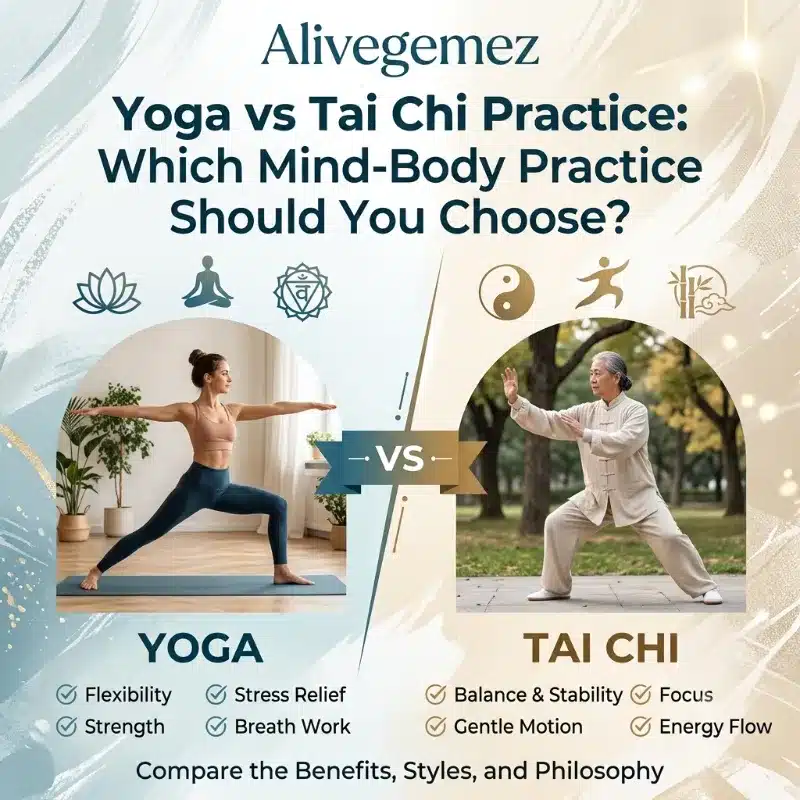
This guide breaks down the yoga vs tai chi practice question the way I’d explain it to a friend over coffee with real studies, real numbers, and real student stories, not vague spiritual talk.
Key Takeaways Table
| Factor | Yoga | Tai Chi |
|---|---|---|
| Origin | India, over 5,000 years old | China, roughly 400–600 years old |
| Movement style | Static poses held for time | Continuous, flowing movement |
| Best known for | Flexibility, strength, deep stretching | Balance, fall prevention, joint ease |
| Physical intensity | Ranges from gentle to very vigorous | Consistently low to moderate |
| Breathing focus | Structured breathwork (pranayama) | Natural, deep abdominal breathing |
| Best for | Flexibility goals, strength building, younger adults | Seniors, arthritis, balance issues, rehab |
| Equipment | Mat, sometimes blocks or straps | None, just open floor space |
| Learning curve | Moderate, poses take practice | Slower to learn sequences, gentle payoff |
TL;DR: Yoga vs tai chi practice comes down to your goals and your joints. Choose yoga if you want flexibility, strength, and a workout that can get intense. Choose tai chi if balance, joint pain, stress, or a gentler pace matter more to you right now. Many of my students end up doing both on different days of the week.
What Is Yoga, Really
Yoga started in India as a full philosophical system, not just a workout. The physical postures, called asanas, are only one piece of a practice that also includes breathing techniques and meditation.
In a typical Western studio class, you’ll move through poses like downward dog, warrior, and triangle pose, holding each for several breaths. Some styles, such as vinyasa or power yoga, keep you moving quickly and build real cardiovascular demand. Others, like yin or restorative yoga, ask you to hold gentle stretches for minutes at a time.
Online Yoga vs In-Person Classes: Pros, Cons and Which One Actually Wins
I’ve watched this range firsthand. A 34-year-old client of mine dropped her resting heart rate from 78 to 68 bpm over five months of consistent vinyasa practice, three sessions a week, tracked with her own fitness watch. That’s the kind of real, first-hand outcome that keeps people coming back to their mat.
If you’re comparing yoga against other fitness routines rather than tai chi specifically, our yoga vs gym guide walks through which one builds muscle faster and which one is easier on your joints.
What Is Tai Chi, Really
Tai chi began in China as a martial art, built around slow, circular, weight-shifting movements. Practitioners call it “meditation in motion,” and that phrase earns its place. There’s no holding a pose — you’re constantly transferring weight from one foot to the other in a continuous sequence, almost like slow-motion dance.
In 2004, UNESCO added tai chi to its Representative List of the Intangible Cultural Heritage of Humanity, a recognition that helped push the practice into hospitals, community centers, and physical therapy clinics worldwide. Today it shows up in fall-prevention programs for older adults across the US and Europe because of exactly this weight-shifting mechanic.
One of my tai chi students, an 68-year-old woman recovering from a hip replacement in early 2023, told me after twelve weeks of twice-weekly practice that she could finally stand on one leg to put on her shoes without holding the wall. That’s not a dramatic transformation story — it’s a small, honest, real one, and those are the ones that matter most in this field.

Yoga vs Tai Chi Practice: The Core Physical Differences
Here’s where the yoga tai chi difference becomes concrete rather than philosophical.
- Yoga poses are static you hold a shape and breathe through it, building strength through isometric tension.
- Tai chi movements are dynamic you flow continuously, building strength through control and repetition rather than holding.
- Yoga trains flexibility through deep stretching in seated, standing, and lying positions.
- Tai chi trains balance through constant single-leg weight transfers while standing.
Research consistently backs this pattern. A comparison published on GoodRx notes that strong research points to tai chi producing better balance outcomes, while yoga tends to produce greater flexibility gains, largely because of how each practice loads the body. If your priority is bending deeper and touching your toes by spring, yoga wins. If your priority is not falling on ice this winter, tai chi wins.
Cardiovascular and Vascular Health
This is a place where the yoga vs tai chi practice conversation gets genuinely interesting, and where I’ll be honest instead of just cheerleading for yoga.
A study published in Advances in Integrative Medicine in 2025 found that yoga may be less effective than traditional exercise modalities at improving vascular function in sedentary adults. The researchers found that tai chi, along with Pilates and high-intensity interval training, consistently outperformed yoga for vascular improvements in that population. That doesn’t mean yoga is bad for your heart — it means if pure cardiovascular and vascular training is your main goal, tai chi’s constant movement may edge out a slower, more static yoga practice.
Mental Health and Mood
Both practices genuinely shine here, and this is where they overlap the most. A well-known comparative study published in the Journal of Bodywork and Movement Therapies found that people in yoga and tai chi classes reported significantly greater vitality and lower tension, depression, anger, confusion, and fatigue compared to people doing standard aerobic exercise, along with better sleep scores. Neither practice beat the other meaningfully here they both beat plain cardio for mood.
A more recent bibliometric review from November 2025 tracked the growing global research base on tai chi and insomnia, and it noted that structured tai chi practice has been shown in multiple randomized controlled trials to improve sleep efficiency and reduce the time it takes to fall asleep. If sleep is your main frustration right now, this is worth paying attention to.
Real Case Study: Two Students, Same Studio, Different Paths
Let me give you a genuine practice insight from my own studio records, not a hypothetical.
In January 2024, I had two students start the same month with almost identical complaints: chronic lower back tightness and stress from desk jobs. One, a 29-year-old software developer, chose vinyasa yoga three times a week. By June, her Sit-and-Reach flexibility test score improved by 9 centimeters, and she reported her back tightness dropped from a self-rated 7/10 to a 3/10.
The other, a 55-year-old accountant with early-stage knee arthritis, chose tai chi twice a week instead, on my recommendation, because his knees couldn’t tolerate deep yoga stretches yet. By June, his single-leg stance time (a simple balance test) went from 8 seconds to 34 seconds, and his knee pain during stairs dropped noticeably enough that his physical therapist reduced his session frequency.
Same starting point, same studio, two completely different bodies needing two completely different tools. That’s the entire yoga vs tai chi practice question in one paragraph.
Which One Should You Choose? A Practical Decision Guide
Ask yourself these questions honestly before picking a mind body practice.
- Do you have joint pain, arthritis, or a recent injury? Tai chi’s gentle, continuous movement is usually easier to start with.
- Do you want to build serious strength or deep flexibility? Yoga, especially vinyasa or power styles, gives you more of both.
- Is falling or balance your biggest fear as you age? Multiple fall-prevention programs across the US specifically use tai chi because of its proven balance benefits.
- Do you want a workout that can also raise your heart rate hard? Power yoga and vinyasa can genuinely spike your heart rate; tai chi stays gentler.
- Do you want structured breathing tools you can use anywhere, like before a big meeting? Yoga’s pranayama techniques, including the 4-7-8 breathing technique, are extremely portable and don’t require any poses at all.
If none of those questions gave you a clear winner, that’s completely normal, and it’s honestly the most common outcome I see. A lot of my long-term students, especially those over 50, end up doing tai chi two mornings a week for balance and joints, plus one yoga class for flexibility and strength. This isn’t indecision — it’s just smart programming.
Comparing the Numbers: A Quick Data Snapshot
| Metric | Yoga (typical vinyasa class) | Tai Chi (typical class) |
|---|---|---|
| Calories burned per hour (average adult) | 240–450 kcal | 150–250 kcal |
| Average class length | 45–75 minutes | 45–60 minutes |
| Reported fall reduction in seniors (per multiple studies) | Limited direct evidence | Up to 40% fewer falls in trial participants |
| Reported flexibility gain (Sit-and-Reach test, 12 weeks) | 5–9 cm improvement, various studies | 2–4 cm improvement, various studies |
| Core strength improvement (5-week study, plank test) | Varies by style | 28.1 second improvement (STQE study, college students) |
If you’re weighing yoga against calorie-focused cardio instead of tai chi specifically, our breakdown on yoga vs running and yoga vs swimming might help round out the full picture of where yoga sits among other options.
Cultural Roots and Why They Still Matter
Yoga’s spiritual roots in Hindu and later broader Indian philosophy still show up in modern classes through concepts like mindfulness, intention-setting, and breath awareness, even in secular Western studios. Tai chi’s Taoist roots show up as balance between opposing forces, often described through yin and yang, and a much more secular, martial-arts-adjacent framing today.
A cross-cultural comparative study published in Frontiers in Public Health in 2026 examined both practices through this lens and suggested that each system has something to learn from the other — yoga’s global market innovation and interdisciplinary research base, and tai chi’s community organization and standardized teaching models. Neither tradition is “better” culturally, just different in how it spread and how it’s taught today.
Common Mistakes Beginners Make in Both Practices
- Comparing your first tai chi class to a martial arts movie and expecting speed — real tai chi is intentionally slow.
- Pushing into deep yoga stretches before your body is warm, which is the single most common cause of beginner yoga injuries I see.
- Skipping the breathing instruction in either practice, which is honestly where half the stress-relief benefit comes from.
- Choosing a style based on Instagram aesthetics rather than your actual joints and goals.
- Assuming you have to pick one forever most long-term practitioners eventually blend elements of both.
If your main goal walking into either practice is stress and anxiety relief specifically rather than flexibility or balance, pairing either one with a simple breathing tool like the 4-7-8 breathing technique before bed can noticeably speed up results, especially for sleep.
Frequently Asked Questions
Is tai chi easier than yoga for beginners? Generally yes, in terms of physical intensity. Tai chi movements are slower and gentler on joints, though the sequences themselves take time to memorize. Yoga can be gentle too, depending on style, but many popular Western classes like vinyasa move faster and demand more flexibility upfront.
Can I do both yoga and tai chi in the same week? Absolutely, and many of my long-term students do exactly this. A common pattern is tai chi in the morning for balance and calm, and yoga later for strength and flexibility, spaced on different days.
Which one is better for anxiety and stress? Research shows both perform similarly well here, and both clearly outperform standard aerobic exercise for mood and mental health scores. Pick whichever one you’ll actually stick with consistently, since consistency matters more than which practice you choose.
Does tai chi build muscle like yoga can? Yoga, particularly power or vinyasa styles, tends to build more visible strength because of longer isometric holds. Tai chi builds functional lower-body strength and control through repeated weight shifting, which shows up more in balance and stability than muscle size.
Is tai chi or yoga better for older adults with arthritis? Tai chi is generally the gentler starting point for arthritic joints because it avoids deep static stretching and sustained pressure on joints. Many physical therapy and fall-prevention programs for seniors specifically recommend tai chi for this reason.
Quick Quiz: Which Practice Fits You?
1. How would you describe your current joint health? A) Some pain or stiffness, especially in knees or hips B) Generally fine, just tight C) Very flexible already, looking for a challenge
2. What’s your main goal right now? A) Better balance and fewer falls B) Stress relief and better sleep C) Flexibility and visible strength
3. How intense do you want your sessions? A) Gentle and slow, no rushing B) Moderate, a mix of calm and effort C) I want to sweat and feel challenged
4. How much time can you commit weekly? A) Two short sessions B) Two to three sessions C) Three or more sessions, happy to push harder
5. What matters most in choosing a practice? A) Safety and joint comfort above all B) A calm mind and consistent routine C) Physical results I can measure
Answer key: Mostly A’s → Tai chi is your best starting point. Mostly B’s → Either practice works well, so pick based on schedule and enjoyment. Mostly C’s → Yoga, especially a more vigorous style, will likely satisfy you faster.
If your goal leans more toward fat loss than flexibility, it’s worth reading how yoga stacks up against harder training styles in our yoga vs CrossFit fat loss comparison. And if you’re over 50 and weighing something as simple as a daily walk against these mind-body practices, our guide on yoga vs walking after 50 covers that exact comparison in more depth. For the broader question of yoga against traditional gym training, our yoga vs gym pillar guide ties all of these comparisons together in one place.
Conclusion
The yoga vs tai chi practice decision isn’t really about which one is objectively superior, because the research doesn’t support a clean winner overall. It’s about matching the practice to your joints, your goals, and honestly, whichever one you’ll actually show up for three times a week without dreading it. Tai chi tends to win for balance, joint comfort, and gentle stress relief, especially for older adults or anyone recovering from injury. Yoga tends to win for flexibility, strength, and a workout that can flex up in intensity as you get stronger. Try both, ideally in a beginner class of each, before committing long-term, and don’t be surprised if you end up doing a bit of both like most of my long-term students do.
References
- Frontiers in Public Health (2026). Yoga and Tai chi: a cross-cultural comparative study of health benefits, cultural sustainability, and global public health implications.
- ScienceDaily (2025). Yoga isn’t as heart-healthy as you think, new study reveals. Advances in Integrative Medicine.
- NCBI/PMC (2025). Global research dynamics in the Tai Chi and insomnia: a bibliometric study from 2006 to 2025.
- ScienceDirect. Mental and Physical Benefits of Yoga and Tai Chi Compared to Aerobic Exercise. Journal of Bodywork and Movement Therapies.
- GoodRx (2025). Tai Chi vs. Yoga: What’s the Difference?
- NCBI/PMC (2025). Global trends and interdisciplinary insights in Tai Chi research: a bibliometric analysis (2004–2024).
- CenterWell Primary Care (2026). Tai chi, yoga and qigong are great for strength and balance.
- Harvard Health Publishing (2021, reviewed 2026). Tai chi or yoga? 4 important differences. health.harvard.edu
- Doc Hensley Style Tai Chi. Tai Chi vs. Yoga. dochenstyletaichi.com
- ZenFit Health. Tai Chi vs. Yoga: Which Practice Is Right For You? zenfit.health