
yoga nidra sleep technique It is 2 a.m. Your body is exhausted, but your brain is running a full staff meeting. Sound familiar? If so, you are one of roughly 50 to 70 million American adults living with a chronic sleep problem, according to national sleep data compiled in 2025. You have probably already tried the usual advice: no screens before bed, chamomile tea, a weighted blanket. Nothing sticks. This is where the yoga nidra sleep technique comes in, and it is not another wellness fad. It is a structured, guided practice with a real research base behind it, and it takes as little as 15 minutes lying flat on your back doing, quite literally, nothing.
Want to learn more about Guided vs Silent Meditation: Which Is Better For You? (2026) read our latest blog post
I have spent over a decade teaching this practice and studying the science behind it, and I want to walk you through exactly how it works, what the newest 2026 research actually says, and how to do it tonight. For a broader look at the full site and other rest-focused resources, you can also browse RealYogaHub.com directly.
Key Takeaways
| What You’ll Learn | Quick Summary |
|---|---|
| What yoga nidra is | A guided lying-down meditation that moves the brain toward sleep-like states without you falling unconscious |
| Does it actually help sleep | A 2026 review of 6 randomized trials (244 people) found real improvements in falling asleep faster and sleeping longer |
| How long it takes | Most beginners see a difference within 7 to 14 nights of daily practice, 15 to 30 minutes per session |
| The basic structure | Eight repeatable stages, from settling the body to setting an intention to returning to full alertness |
| Who should be careful | People with active trauma or PTSD should practice with a trained guide first, not alone |
| Best time to practice | Late afternoon or right before bed, based on the sessions used in most sleep studies |
What Is Yoga Nidra, Really?
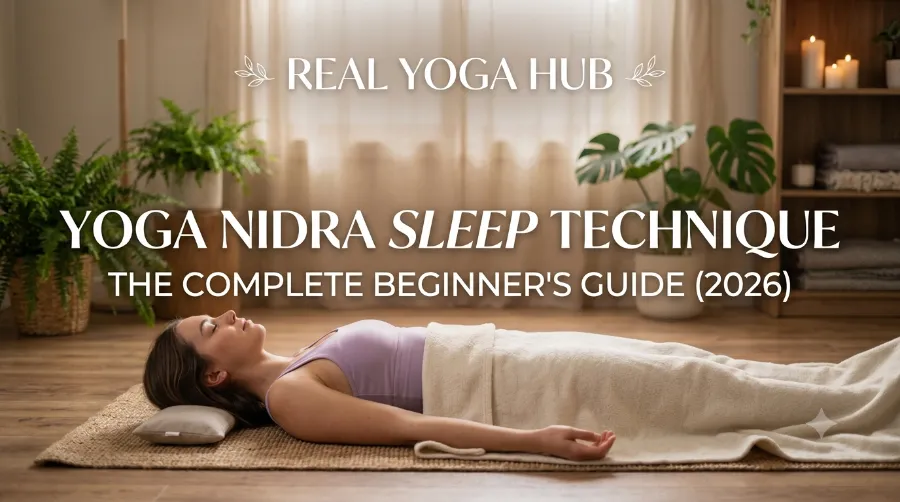
Yoga nidra translates roughly to “yogic sleep,” which is a slightly misleading name. You are not asleep. You are resting in a state somewhere between waking and dreaming, the same borderland your brain passes through for a few seconds every night before it drops into stage one sleep. A teacher, or a recording, walks you through the stages while you lie still on your back, arms loose at your sides, eyes closed.
This is different from typical meditation, where you are usually asked to sit upright and focus attention. If you have already read our guide to meditation techniques for beginners, you already understand the family this practice belongs to. Nidra is the version built specifically for deep rest rather than alert focus, which is exactly why it has become the go-to yogic sleep guide for people whose main complaint is a racing mind at bedtime.
Read our Latest blog body scan meditation steps Here
The practice traces back to tantric yoga traditions, but the modern secular version was standardized in the 1970s by Swami Satyananda Saraswati at the Bihar School of Yoga. Today it shows up under other names too, including NSDR, short for non-sleep deep rest, a term popularized more recently by neuroscience researchers. Under the hood, it is largely the same yoga nidra sleep technique with a rebrand. Bali YTTC’s complete yogic sleep guide covers this tantric history in more depth if you want to go further into the roots of the practice.
Does the Yoga Nidra Sleep Technique Actually Work for Insomnia?
This is the fair question, and the honest answer is: the evidence has gotten notably stronger in the last year.
A systematic review published in March 2026 in the Journal of Integrative and Complementary Medicine pulled together six randomized controlled trials covering 244 participants, including people with chronic insomnia, hypertension, acute insomnia, COVID-19 frontline healthcare workers, and athletes. Across these trials, researchers reported consistent improvements in three specific markers: how fast people fell asleep, how long they stayed asleep, and how efficiently they slept through the night without waking.
A separate 2026 meta-analysis, led by researcher Shashank Ghai and published in the Annals of the New York Academy of Sciences, went even bigger. It combined 73 studies and 5,201 participants and found meaningful drops in stress, anxiety, and depression when yoga nidra was compared against active control groups, not just a waitlist. The authors were careful to note that this yoga nidra sleep technique works best as a supporting tool alongside professional care, not a replacement for it, particularly for anyone managing clinical anxiety, depression, or trauma.
There is also a smaller, more targeted 2025 randomized trial from Stress and Health, run by researcher Moszeik and colleagues, comparing an 11-minute and a 30-minute version of the practice. Both lengths improved subjective well-being and shifted diurnal cortisol patterns, the hormone rhythm tied directly to how rested you feel the next day. So no, you do not need a full hour to get benefits.
For anyone searching specifically for a yoga nidra insomnia USA angle, it is worth knowing the scale of the problem this practice is aimed at. National Health Interview Survey data compiled by the CDC on sleep and sleep disorders shows insomnia symptoms affected 19.2 percent of American adults, roughly 46.2 million people, as of the most recent large-scale count, and separate research puts the share of adults reporting some insomnia symptoms in a given year between 30 and 40 percent. The Sleep Foundation’s overview of insomnia is a useful resource if you want to understand where your own symptoms fall on that spectrum. This is not a niche complaint. It is one of the most common health issues in the country, which is exactly why a free, equipment-free, evidence-backed tool matters.
To get a better understanding of How Long Should You Meditate Every Day our guide breaks down exactly what to expect.
Sleep Outcomes Reported Across Recent Yoga Nidra Trials
| Study Focus (Year) | Sample Size | Reported Outcome |
|---|---|---|
| Chronic insomnia patients (2026 review) | 244 total across 6 trials | Faster sleep onset, longer total sleep time |
| COVID-19 healthcare workers | Included in above review | Outperformed relaxation-to-music for insomnia, anxiety, depression |
| Stress, anxiety, depression meta-analysis (2026) | 5,201 across 73 studies | Meaningful drops versus active control groups |
| Cortisol and well-being trial (2025) | Online RCT cohort | Shifted diurnal cortisol, improved well-being at both 11 and 30 minutes |
| Nursing students during clinical practicum (2026, ongoing) | Enrolling as of April 2026 | Studying stress, sleep quality, academic resilience |
The 8 Nidra Steps: How to Actually Do the Yoga Nidra Sleep Technique
Here is the practical yogic sleep guide you came for. These nidra steps follow the traditional structure taught in most certified programs, adapted for a beginner doing this solo at home.
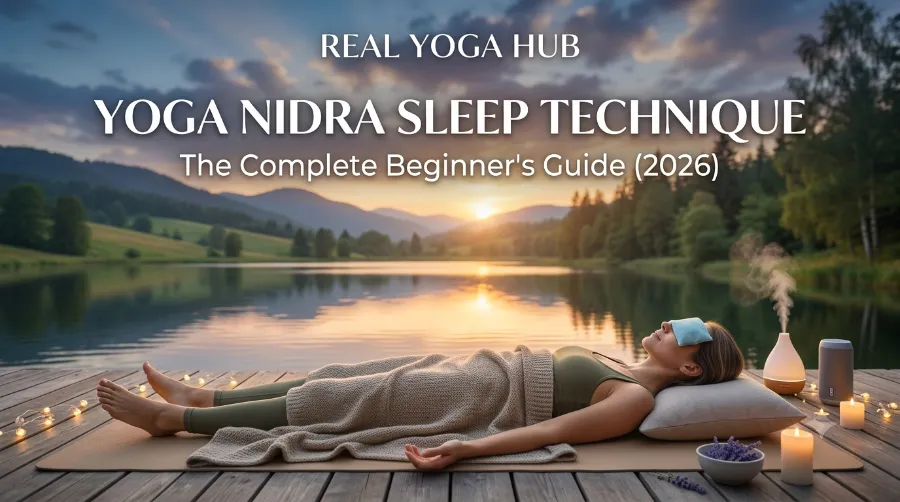
- Get into position. Lie flat on your back, a pillow under your knees if your lower back is tight, arms resting palms-up a few inches from your body. Cover yourself with a light blanket since body temperature drops during the practice.
- Set a resolve (sankalpa). Silently state one short, positive, present-tense intention, something like “I sleep deeply and wake refreshed.” Repeat it once at the start and once at the end.
- Rotate awareness through the body. Mentally scan through each body part in sequence, from right thumb to toes to head, simply noticing each one without moving it.
- Notice the breath. Follow the natural rise and fall of your belly for a minute or two, without trying to control the rhythm.
- Work with opposite sensations. The guide may ask you to imagine heat then cold, heaviness then lightness. This trains the nervous system to shift states more easily.
- Visualize images or a story. A simple guided image, like standing on a quiet beach or in a still forest, gives the mind something gentle to rest on instead of tomorrow’s to-do list.
- Repeat the resolve. Return to the same short phrase you set at the beginning.
- Return slowly. Wiggle fingers and toes, deepen the breath, and either let yourself drift into actual sleep or open your eyes if it is daytime practice.
A full session typically runs 20 to 45 minutes, though shorter 11 to 15 minute versions have shown real benefits in trials, so do not feel you need the long version to get results. re-origin’s beginner overview also breaks these stages down from a nervous-system-regulation angle, worth a read once the basic sequence feels familiar.
Want to learn more about Somatic Breathing Exercises for Stress and Trauma Recovery read our latest blog post
When and How Often Should You Practice?
Consistency matters more than duration here. Based on the sessions used across most sleep-focused studies, evening practice, right before your usual bedtime, tends to produce the clearest results for insomnia specifically. If you already practice box breathing to calm pre-sleep anxiety, pairing four rounds of box breathing before your nidra session can help settle a racing heart rate before you even begin the body scan.
A few practical notes worth knowing before your first week:
- Practice on an empty-ish stomach; a heavy meal right before bed fights against the relaxation response.
- Keep the room cool and dark, the same conditions that support any healthy sleep routine.
- Use a recorded guide for at least your first month. Trying to remember the sequence yourself pulls you back into thinking mode, which defeats the purpose.
- Expect some sessions to end in actual sleep. That is completely normal and not a failure of the technique.
Want to learn more about morning meditation routine beginners read our latest blog post
Common Mistakes Beginners Make
Even a simple, lying-down practice has a few pitfalls that quietly reduce its effectiveness.
- Practicing sitting up. This is not seated meditation. Lying flat is part of what triggers the parasympathetic shift.
- Choosing a session that is too long, too soon. Start with 15 minutes. Build up once the practice feels familiar rather than forcing 45 minutes on night one.
- Judging yourself for falling asleep or staying too alert. Both outcomes are fine. There is no “correct” experience to chase.
- Skipping the resolve step. This is the part most beginners cut for time, yet it is the piece tied most closely to the practice’s psychological benefits in the research above.
- Using it as a total replacement for sleep hygiene basics. This yoga nidra sleep technique works best alongside, not instead of, a consistent bedtime, limited late caffeine, and reduced screen light.
How This Compares to Other Relaxation Approaches
People often ask how yoga nidra stacks up against standard meditation or simple breathing exercises. The honest comparison: meditation generally builds sustained attention and is often practiced seated, which you can explore further in our meditation techniques for beginners resource. Breathing techniques like box breathing work fast, in minutes, on acute anxiety and racing thoughts. Yoga nidra sits in between, longer than a breathing exercise, more structured and passive than open meditation, and specifically designed around the sleep transition itself. If you enjoyed working with a mantra, our loving kindness meditation guide uses a similar repetition style, but directs each phrase toward warmth and compassion instead.
For readers who want a deeper dive after this article, Rezerv’s full 2026 guide to yoga nidra for sleep covers additional variations worth trying once you’re comfortable with the basics. Bali YTTC’s complete yogic sleep guide is a solid resource if you’re curious about the tantric roots of the practice. And re-origin’s beginner overview is worth a look if you want a nervous-system-focused explanation of why this works.
Frequently Asked Questions
Is yoga nidra safe for everyone?
For most healthy adults, yes. People with active trauma, PTSD, or a recent traumatic event should work with a trauma-informed teacher first rather than practicing alone with a recording, based on caution noted in the 2026 meta-analysis referenced above.
How is yoga nidra different from NSDR?
NSDR, short for non-sleep deep rest, is largely a rebranded, secularized version of the same practice. Nearly all the clinical research supporting NSDR claims actually comes from yoga nidra studies specifically.
Can beginners do this without an app or teacher?
A guided audio recording is recommended for at least the first several weeks. Once the sequence feels familiar, some practitioners move to a self-guided version, though most stick with recordings long-term since it keeps the mind from wandering into planning mode.
How long until I notice a difference in my sleep?
Trial protocols generally ran participants for two to eight weeks before measuring outcomes, so give the yoga nidra sleep technique at least two consistent weeks before judging results.
Does yoga nidra replace treatment for a diagnosed sleep disorder?
No. Every major review on this topic describes it as an adjunctive, supportive tool. If you have a diagnosed sleep disorder, keep working with your physician or sleep specialist alongside this practice, and check the Sleep Foundation for general guidance on when to seek that care.
If you want to learn more about Mantra Meditation Beginners Guide check out our detailed guide for practical tips and expert advice
Quick Quiz: Test Your Yoga Nidra Knowledge
1. What does “yoga nidra” translate to?
A) Fire breath
B) Yogic sleep
C) Standing pose
2. What is the recommended body position for practicing?
A) Cross-legged sitting
B) Standing
C) Lying flat on your back
3. What did the 2026 systematic review of 6 RCTs find?
A) No measurable effect on sleep
B) Improved sleep onset, total sleep time, and sleep efficiency
C) Only helped athletes
4. What is a “sankalpa”?
A) A breathing pattern
B) A short personal resolve or intention
C) A type of yoga mat
5. Roughly how many US adults report insomnia symptoms in a given year, per recent data?
A) 2 to 5 percent
B) 30 to 40 percent
C) Nearly 90 percent
Answer Key: 1-B, 2-C, 3-B, 4-B, 5-B
Conclusion
The yoga nidra sleep technique is not a miracle cure, but it is one of the few relaxation practices with real trial data behind it for sleep specifically, cortisol regulation, and stress reduction. You need no equipment, no app subscription, no yoga experience. Just a floor, a blanket, fifteen quiet minutes, and a little consistency over two weeks. Start tonight with the eight-step sequence above, keep your resolve simple, and give your nervous system the chance to do what it already knows how to do.
References
- Dutta A, Mooventhan A, Nivethitha L, Dharani E. Efficacy of Yoga Nidra in Managing Sleep Disorders: A Systematic Review of Randomized Controlled Trials. Journal of Integrative and Complementary Medicine, 2026.
- Ghai S, Odyniec P, Ghai I. Yoga nidra meta-analysis on stress, anxiety, and depression. Annals of the New York Academy of Sciences, 2026.
- Moszeik EN, et al. The Effects of an Online Yoga Nidra Meditation on Subjective Well-Being and Diurnal Salivary Cortisol: A Randomised Controlled Trial. Stress and Health, 2025.
- CDC. Sleep and Sleep Disorders, National Health Interview Survey data.
- Sleep Foundation. Insomnia Overview.
- NCT07631117: Yoga Nidra for Stress, Sleep Quality, and Academic Resilience in Nursing Students, ClinicalTrials.gov, 2026.
- Rezerv. Yoga Nidra for Sleep: Full Guide 2026.
- Bali YTTC. Yoga Nidra: The Complete Guide to Yogic Sleep, 2026.
- re-origin. Yoga Nidra for Beginners.