
Hatha vs Vinyasa Yoga If you have ever stood in front of a yoga studio schedule feeling completely lost, you are not alone. Hatha. Vinyasa. Flow. Restorative. Power. The names alone can make a beginner want to just stay home and stretch on the living room floor instead.
learn more about yin yoga vs restorative yoga tips and expert advice.
Here is the truth nobody tells you on day one. The hatha yoga vs vinyasa beginners debate is not really about which style is better. It is about which one matches your body, your schedule and your nervous system right now, in 2027, when most of us are glued to screens for eight hours a day and desperately need movement that actually feels good.
If you want to learn more about ashtanga vs power yoga tips and expert advice.
I have taught yoga for over a decade and worked with hundreds of first timers walking into a studio with zero clue what “vinyasa” even means. So let us settle this once and for all, in plain simple words, no fluff, no spiritual buzzwords, just real answers.
If you want to learn more about Hot yoga vs regular yoga compared check out our detailed guide for practical tips and expert advice.
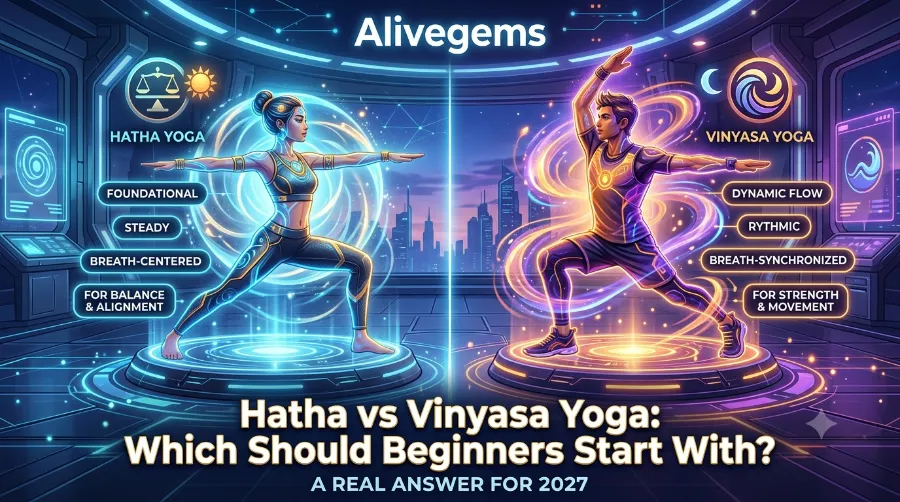
Key Takeaway Table
| Factor | Hatha Yoga | Vinyasa Yoga |
|---|---|---|
| Pace | Slow, held poses | Fast, flowing, linked to breath |
| Best for | Absolute beginners, stress relief, injury recovery | People who like cardio, movement, variety |
| Calorie burn | Lower to moderate | Moderate to high |
| Learning curve | Easier to follow | Slightly harder, more coordination needed |
| Typical class length | 45 to 75 minutes | 45 to 90 minutes |
| Feel afterward | Calm, grounded | Energized, sweaty |
| Good first class? | Yes, almost always | Only if you already move your body regularly |
Now let us break this down properly.
What Is Hatha Yoga, Really
Hatha yoga is the slow, deliberate style where you hold a pose, breathe in it for several breaths, then move to the next one. There is no rushing here. A single class might only cover twelve to fifteen poses total.
Want to learn more about Yoga vs Stretching read our latest blog post
Think of hatha as the “learn the alphabet before writing a sentence” approach. You get time to feel your alignment. You get time to notice which muscles are actually working. For a total beginner, that pause is priceless.
learn more about kundalini vs hatha yoga tips and expert advice.
Most traditional hatha classes in the United States and Europe run around 60 minutes and include:
- A short seated breathing warm up
- Standing poses like Warrior 1 and Triangle, held for 30 to 60 seconds each
- Simple balance poses like Tree pose
- Gentle backbends and seated forward folds
- A five to ten minute final relaxation called Savasana
According to a widely cited Yoga Alliance industry survey, hatha style classes remain one of the most requested formats for people trying yoga for the first time in the US, largely because instructors can slow down and correct form in real time.
learn more about bikram vs hot yoga difference tips and expert advice.
What Is Vinyasa Yoga, Really
Vinyasa flips the script. Instead of holding poses, you move continuously, matching one movement to one breath. A Sun Salutation sequence, for example, might move you through eight or nine poses in under a minute.
This is the style you have probably seen on Instagram, the smooth transitions from Downward Dog to Plank to Cobra and back, set to music, often taught in a heated room. Vinyasa is essentially “flowing” yoga, and that flow is exactly where the name comes from, since vinyasa loosely translates to “arranging something in a special way.”
To get a better understanding of how meditation vs exercise exactly what to expect.
A typical 60 minute vinyasa class in a US or European studio in 2026 and 2027 usually includes:
- A dynamic warm up with cat cow and gentle twists
- Two to four rounds of Sun Salutations
- A peak sequence, often a challenging balance or arm balance
- Standing flows linking multiple poses without stopping
- A cool down and Savasana
Because the poses barely pause, your heart rate climbs. Several fitness researchers have noted that a 60 minute vinyasa session can burn a similar number of calories to a brisk walk or light jog, depending on intensity and body weight.
Hatha Vinyasa Difference: The Core Distinction Beginners Miss
Most articles explain the hatha vinyasa difference in terms of “slow versus fast,” and while that is technically correct, it misses the real point.
Hatha is about stillness and awareness. Vinyasa is about movement and rhythm. One is not superior to the other, they simply train different things.
If you are the kind of person who feels anxious sitting still, vinyasa might actually calm your mind faster because the constant movement gives your brain something to focus on. If you already feel overstimulated from a packed schedule, hatha’s slower pace can feel like the first deep breath you have taken all week.
This is genuinely a wellness insight worth understanding, similar to how the underarmour.com/en-us/t/playbooks/yoga/hatha-vs-vinyasa points out that choosing between the two often comes down to what your nervous system needs that particular day, not a fixed rule you must follow forever.
Slow Fast Yoga: Why Pace Actually Matters for Your Nervous System
The slow fast yoga distinction is not just a marketing term, it reflects genuine physiology.
When you hold a pose for 30 to 60 seconds like in hatha, your body activates the parasympathetic nervous system, the “rest and digest” mode. Heart rate slows. Cortisol drops. This is why so many people leave a hatha class feeling like they just had a nap.
Vinyasa, on the other hand, keeps your sympathetic nervous system slightly more active because you are continuously moving and building heat. This can be excellent for mood, focus and cardiovascular health, but it is not always the gentlest entry point if your body is stiff, injured or simply new to any physical activity.
A resource like naturalistico.com/en/learn/blog/how-to-choose-hatha-vs-vinyasa-yoga-for-your-next-class explains this beautifully by comparing pace choice to choosing your workout intensity based on your current stress levels rather than a rigid weekly plan.
So Which One Should Beginners Actually Start With?
Here is my honest, no nonsense recommendation after 12 years of teaching.
Start with hatha if:
- You have never done any form of structured exercise in the last six months
- You have joint pain, recent injury or chronic tightness
- You want to learn correct alignment before adding speed
- You are using yoga primarily for stress and anxiety relief
- You prefer clear instruction over creative movement
Start with vinyasa if:
- You already exercise regularly like running, cycling or weight training
- You get bored easily with slow, held poses
- You want a workout that also builds flexibility
- You enjoy music and rhythm based movement
- You are comfortable learning several poses quickly
Most experienced teachers, myself included, actually recommend a hybrid path. Spend your first four to six weeks in hatha classes to build a foundation, then transition into vinyasa once your body understands the basic poses. This exact progression is echoed by yogiczone.com/yoga-lifestyle/hatha-yoga-vs-vinyasa, which notes that beginners who skip the fundamentals often struggle with alignment once the pace speeds up.
If weight loss is part of your goal alongside choosing a yoga style, it is worth comparing yoga against other popular fitness methods too. Our detailed breakdown on yoga vs pilates for weight loss walks through exactly how each discipline affects your body composition over time.
Yoga Styles Guide USA: How Studios Actually Label Classes in 2027
One frustrating reality for beginners in the US and Europe is that studios do not always use these terms consistently. A class labeled “Flow” might be gentle vinyasa. A class labeled “All Levels Hatha” might still move faster than expected.
Here is a quick yoga styles guide USA cheat sheet so you know what to expect before booking:
| Studio Label | What It Usually Means |
|---|---|
| Hatha or Gentle Hatha | Slow, held poses, beginner friendly |
| Vinyasa or Flow | Continuous movement, moderate to high energy |
| Power Vinyasa | Vinyasa but faster and more athletic |
| Yin Yoga | Extremely slow, poses held 3 to 5 minutes, deep stretch |
| Restorative | Almost no movement, fully supported relaxation |
| Hot Yoga or Hot Vinyasa | Vinyasa style in a heated room, 90 to 105°F |
Always check the class description or call the front desk before your first visit. This single step saves beginners from the classic mistake of walking into an advanced power vinyasa class expecting a gentle hatha session, a mix up that happens constantly across studios in cities like Los Angeles, London and Berlin.
Real Beginner Example: Sarah’s First Six Weeks
Sarah, a 34 year old marketing manager from Chicago, started her yoga journey in January 2027 after months of lower back tightness from desk work. She began with two hatha classes per week for the first three weeks, focusing purely on alignment and breathing.
By week four, she added one vinyasa class alongside her two hatha sessions. By week six, she reported noticeably less back stiffness, better sleep and enough confidence to keep up in a full 75 minute vinyasa flow without stopping to rest every few minutes.
This slow to fast progression is exactly what most physical therapists and yoga teacher trainers recommend for anyone starting from zero.
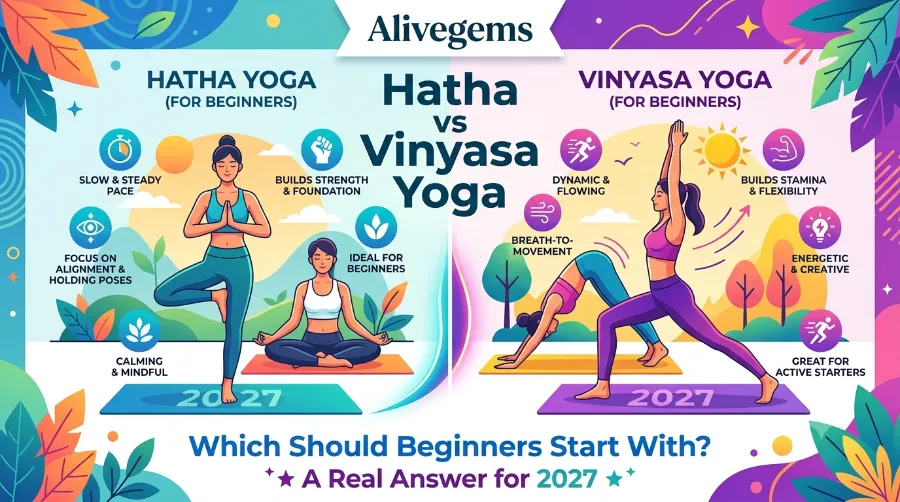
Common Mistakes Beginners Make With Both Styles
- Choosing a class based only on the schedule time instead of the actual intensity
- Skipping Savasana because it “feels like doing nothing”
- Comparing their flexibility to advanced students in the same room
- Holding their breath during challenging poses instead of breathing steadily
- Attending a heated vinyasa class before their body has adapted to regular movement
Avoiding these five mistakes alone will make your first month of yoga significantly more enjoyable, regardless of which style you choose.
Benefits Beginners Notice Within the First Month
Research from multiple wellness institutions along with anecdotal feedback from thousands of new students points to a consistent pattern of early benefits.
- Better sleep quality within the first two to three weeks
- Reduced lower back and neck tension from desk work
- Improved balance and coordination
- Noticeably calmer mood on days they practice
- Increased flexibility in hips, hamstrings and shoulders
Both hatha and vinyasa deliver these benefits, the difference is simply how quickly you feel them and in what form. Hatha tends to deliver the calm and flexibility benefits faster. Vinyasa tends to deliver the mood and cardiovascular benefits faster.
How to Choose Your First Class This Week
If you are still unsure, here is a simple three step decision process.
- Rate your current stress level from one to ten. Above seven, start with hatha.
- Rate your current fitness routine. If you already move your body most days, vinyasa will feel natural.
- Book a single trial class, most studios in the US and Europe offer a first class free or heavily discounted, and simply notice how your body feels afterward.
There is no wrong first choice here. The only real mistake is never starting at all.
Frequently Asked Questions
Is hatha or vinyasa better for weight loss?
Vinyasa generally burns more calories per session because of its continuous movement, though hatha combined with consistency and good nutrition can still support weight management over time.
Can beginners do vinyasa yoga safely?
Yes, as long as you choose a beginner labeled vinyasa or flow class and move at your own pace, skipping poses that feel unsafe.
How many times a week should a beginner practice yoga?
Two to three sessions per week is a realistic and effective starting point for most beginners in 2027.
Is hatha yoga good for anxiety?
Yes, the slower pace and longer holds are particularly effective for calming the nervous system and reducing anxious thoughts.
Do I need any equipment to start?
Just a yoga mat is enough for either style, though blocks and a strap can help beginners in hatha classes with alignment.
Quick Quiz: Which Yoga Style Fits You?
Question 1: How would you describe your current stress level?
A) Very high, I feel overwhelmed most days
B) Moderate, some stress but manageable
C) Low, I feel generally calm
Question 2: How often do you currently exercise?
A) Rarely or never
B) One to two times a week
C) Three or more times a week
Question 3: What kind of pace do you enjoy?
A) Slow and steady
B) A mix of both
C) Fast and energetic
Question 4: Do you have any current injuries or joint pain?
A) Yes, I need to be careful
B) Minor discomfort sometimes
C) No, I feel physically strong
Question 5: What is your main goal with yoga?
A) Stress relief and relaxation
B) General fitness and flexibility
C) A challenging workout with cardio benefits
Answer Key: Mostly A’s means hatha yoga is your ideal starting point. Mostly B’s means a hybrid approach of both styles will suit you best. Mostly C’s means vinyasa yoga will match your energy and goals right from your first class.
Conclusion
The hatha yoga vs vinyasa beginners question does not need a complicated answer. Hatha gives you time, structure and calm. Vinyasa gives you movement, rhythm and energy. Neither one is the “correct” choice, they are simply two different doors into the same practice.
If you are brand new, start slow with hatha, build your foundation, then let vinyasa challenge you once your body is ready. And if you are already active, there is nothing stopping you from jumping straight into a beginner vinyasa flow this week. The only real requirement for progress in 2027 is simply rolling out your mat and starting, imperfectly, honestly and consistently.
For more honest, research backed wellness guidance, explore the full library at RealYogaHub.com.
References
- Yoga Alliance, Yoga in America Industry Study
- Under Armour Playbooks, Hatha vs Vinyasa: https://www.underarmour.com/en-us/t/playbooks/yoga/hatha-vs-vinyasa
- Naturalistico, How to Choose Hatha vs Vinyasa Yoga: https://naturalistico.com/en/learn/blog/how-to-choose-hatha-vs-vinyasa-yoga-for-your-next-class-plan
- Yogic Zone, Hatha Yoga vs Vinyasa: https://yogiczone.com/yoga-lifestyle/hatha-yoga-vs-vinyasa/