
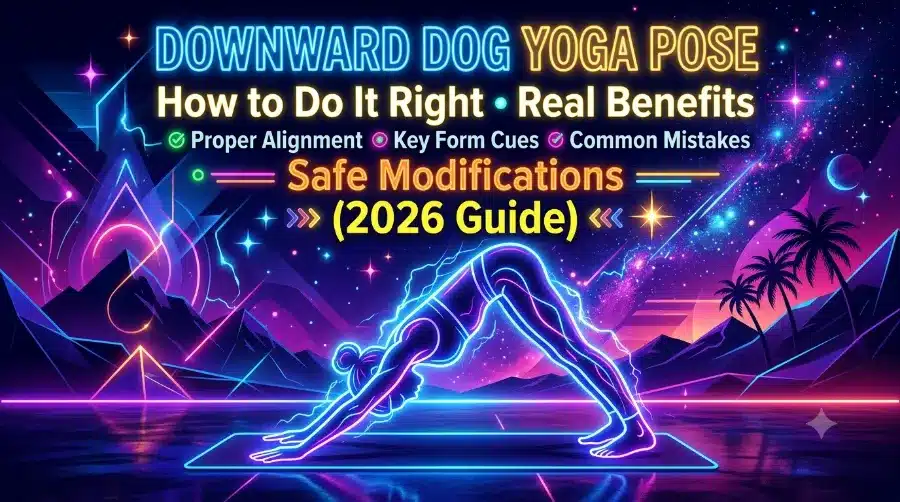
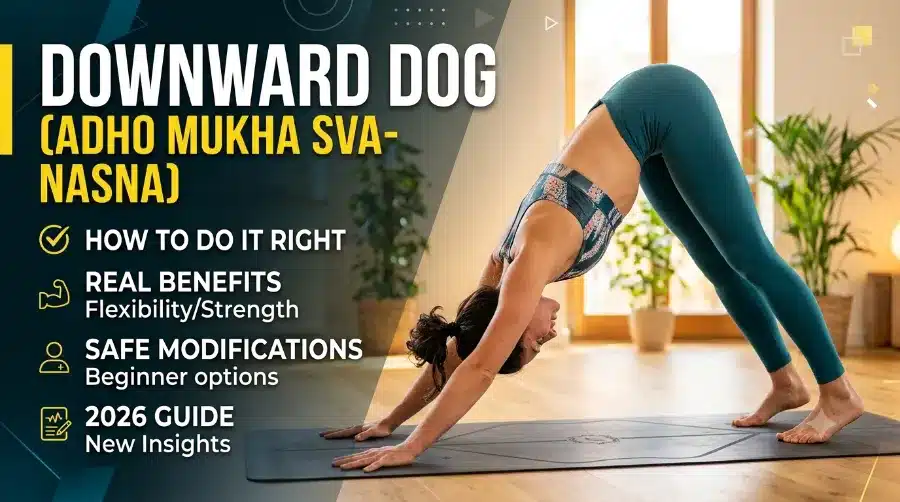
The downward dog yoga pose gets its English name from the shape it makes: hips lifted high, hands plus feet on the ground, body forming an upside-down V that looks a lot like a dog stretching after a nap. In Sanskrit it is called Adho Mukha Svanasana, from adho (downward), mukha (face), svana (dog).
Roughly one in six US adults now practice yoga, according to CDC survey data reported by NPR’s health desk, which means millions of people are stepping into this exact shape every week, often in gyms, living rooms, or studio classes. If you are brand new to the mat entirely, our 50 Best Yoga Poses for Beginners at Home guide on RealYogaHub is a good place to start before layering this pose into a fuller routine.
How To Do Downward Dog Pose Step By Step
Getting into a downward facing dog tutorial mindset means thinking in stages, not one big jump into the shape. Here is the sequence I teach in almost every class, and it lines up closely with the cueing in Yoga With Adriene’s downward dog breakdown, one of the most watched tutorials online for good reason. To get a better understanding of childs pose yoga benefit our guide breaks down exactly what to expect.
- Start on hands and knees. Wrists stacked under shoulders, knees under hips, fingers spread wide with the middle finger pointing forward.
- Tuck your toes. Curl your toes under so the balls of your feet touch the mat.
- Lift your hips up and back. Press firmly through your palms, straighten your arms, send your hips toward the ceiling rather than forward.
- Bend your knees generously. Keep a soft bend at first. Your heels do not need to touch the floor, this is a myth that keeps beginners stuck.
- Lengthen your spine. Reach your tailbone away from your hands, relax your neck, let your head hang between your upper arms.
- Distribute your weight. Roughly 60 percent should sit in your legs, 40 percent in your arms, not the other way around.
- Hold for 5 breaths. Then release by dropping to your knees or stepping forward into a fold.
A short home practice like our 10-Minute Morning Yoga Routine is a simple way to build this pattern into muscle memory before breakfast.
The Real Benefits of Downward Dog Pose
This pose earns its spot in nearly every sequence for reasons that go well past flexibility marketing.
Physical Benefits Backed by Research
Downward facing dog stretches the hamstrings, calves, and spine while it strengthens the shoulders, arms, and core at the same time. One review published in the Journal of Bodywork and Movement Therapies found that yoga sequences containing this exact pose helped reduce chronic low back pain plus improve posture over several weeks of consistent practice, a finding also echoed in the pose library entry over at Yoga Journal. A separate paper in the International Journal of Yoga linked regular practice to gains in flexibility, strength, balance, reduced stress, lower anxiety scores.
If lower back tightness is your main complaint, pair this pose with the sequences in our Yoga Poses for Back Pain Relief guide for a more targeted routine.
Mental and Stress Benefits
Something interesting happened in the yoga world by 2026: stress relief overtook flexibility as the top reason Americans step onto a mat, cited by 51 percent of practitioners according to Yoga Alliance data, the first time that shift has ever shown up in the numbers. The mild inversion in downward dog increases blood flow toward the brain, which many practitioners describe as an almost instant reset button during a stressful afternoon. f you want to learn more about sun salutation steps beginners check out our detailed guide for practical tips and expert advice.
Who Is Practicing (And Why It Matters For You)
You are not alone on this mat. More than 34 million Americans practice yoga regularly, making it more popular in the US than jogging or golf. Globally the number climbs past 300 million practitioners as of 2025. Knowing that this pose has been tested, refined, plus taught to millions of bodies of every shape, age, and ability should take some of the pressure off your first attempts. To get a better understanding of warrior yoga poses beginners our guide breaks down exactly what to expect.
US Yoga Practice Snapshot (Latest Available Data)
| Metric | Figure |
|---|---|
| US adults who practice yoga | About 1 in 6 (CDC, 2022 survey) |
| Regular US practitioners | 34 to 36 million |
| Top reason for practicing (2026) | Stress relief, 51 percent |
| Women vs men practicing | Women roughly 2x more likely |
| Global practitioners | 300 million plus |
| Reported sleep improvement | Nearly 60 percent of practitioners |
Sources: CDC National Health Interview Survey, Yoga Alliance, Statista.
The 5 Most Common Downward Dog Mistakes
Even experienced yogis fall into these patterns without noticing.
- Collapsing into the wrists. Weight pools into the heel of the palm instead of spreading across the whole hand, which strains the joint over time.
- Forcing the heels down. Tight calves make flat heels unrealistic for most beginners, chasing this look wastes energy that should go into spinal length.
- Rounding the upper back. A rounded spine here defeats the point, shoulders should stay broad, ears roughly in line with the upper arms.
- Locking the elbows too hard. Hyperextension puts strain on the joint, keep a micro-bend plus active engagement instead.
- Holding the breath. Downward dog is a strength pose disguised as a stretch, steady breathing keeps the muscles working correctly.
Modifications for Wrists, Hamstrings, Shoulders, Pregnancy
A pose is only useful if your body can actually do it safely. Here are the adjustments I reach for most often with real students, several of them borrowed from the excellent breakdown at Body Positive Yoga’s beginner guide, which covers stance width plus prop use in a way most standard tutorials skip.
For wrist pain or old injuries:
- Place your palms on yoga blocks to reduce the extension angle.
- Try Dolphin Pose instead, forearms on the mat rather than the hands.
- Spread the fingers wide, root down through the index knuckle plus thumb base rather than the wrist crease.
For tight hamstrings or a stiff lower back:
- Bend the knees generously, this is a permanent option for many bodies, not a beginner phase.
- Walk the feet slightly wider than hip width.
For shoulder tightness or impingement:
- Widen your hand placement.
- Use a strap looped around the upper arms just above the elbows to encourage external rotation.
For pregnancy, especially the third trimester:
- Practice against a wall or with hands on a chair seat to reduce pressure on the abdomen.
- Skip the pose entirely if you feel dizzy or short of breath, listen to a prenatal-certified instructor.
For a broader stretching plan alongside this pose, our 30-Day Flexibility Plan builds progressively toward a fuller expression of the shape.
Who Should Be Careful With This Pose
Downward dog is generally safe, though a few groups should modify or skip it.
- People with uncontrolled high blood pressure, since the mild inversion can raise pressure further.
- Anyone with a recent wrist, shoulder, or hand injury.
- Late-stage pregnancy, as noted above.
- Anyone with glaucoma or detached retina, due to the head-below-heart positioning.
Always check with a doctor or physical therapist before starting a new practice if you carry any of these conditions.
To get a better understanding of 5 Yoga Poses to Avoid With Bad Knees our guide breaks down exactly what to expect.
Frequently Asked Questions
How long should I hold downward dog?
Beginners can start with 3 to 5 breaths, roughly 15 to 20 seconds, building toward a full minute as strength plus comfort improve.
Why do my wrists hurt in downward dog?
Most wrist pain comes from uneven weight distribution, specifically too much load sitting in the heel of the palm rather than spread across the fingers plus knuckles.
Is downward dog a beginner pose?
It is taught to beginners, though it is genuinely one of the more demanding full-body poses in a typical class, patience with modifications pays off.
Can I do downward dog every day?
Yes, for most healthy adults, daily practice is safe plus often builds strength, flexibility, better posture over just a few weeks.
What is the difference between downward dog and dolphin pose?
Dolphin pose uses the forearms instead of the hands, which removes wrist strain while keeping a similar stretch through the spine plus hamstrings.
Want to learn more about 10 hip opening yoga poses read our latest blog post
Quick Self-Check Quiz
Test what you just learned.
1. What is the Sanskrit name for downward dog?
A) Bhujangasana
B) Adho Mukha Svanasana
C) Tadasana
2. What percentage of body weight should ideally sit in the legs versus arms?
A) 60 percent legs, 40 percent arms
B) 40 percent legs, 60 percent arms
C) Equal split, 50/50
3. What is the most common cause of wrist pain in this pose?
A) Feet placed too wide
B) Weight pooling into the heel of the palm
C) Holding the breath too long
4. Which modification helps most with tight hamstrings?
A) Locking the knees straight
B) Bending the knees generously
C) Pointing the toes
5. Which group should generally avoid or modify this pose?
A) Healthy adults under 40
B) Late-stage pregnancy or uncontrolled high blood pressure
C) People who practice daily
Answer Key: 1-B, 2-A, 3-B, 4-B, 5-B
Conclusion
Downward dog rewards patience more than flexibility. Bend the knees when needed, spread the fingers wide, let the heels hover, your body will find its own version of this shape over weeks of steady practice. Whether you came here chasing back pain relief, a calmer mind, or just a stronger stretch after sitting all day, this single pose delivers a surprising amount for the time it takes. Roll out the mat, try the cues above, notice how different the pose feels once the weight actually moves where it should.
References
- Centers for Disease Control and Prevention, National Health Interview Survey, yoga participation data
- Yoga Alliance, 2026 industry and motivation data
- Statista, US yoga participation statistics
- Journal of Bodywork and Movement Therapies, yoga and low back pain research
- International Journal of Yoga, flexibility and stress outcome studies