
You roll out your mat, fold forward, touch your toes (or get close), hold for a few breaths, then move on with your day. Is that yoga? Is it just stretching? Does the label even matter?
It matters more than most people think. The confusion between yoga vs stretching differences is one of the most common mix-ups in the fitness world, and it quietly shapes whether you actually get the results you’re after. If your goal is flexibility training, injury prevention or simply feeling less stiff by Friday, picking the wrong tool for the job wastes your time.
learn more about kundalini vs hatha yoga tips and expert advice.
Here is the short version before we go deep: stretching is a technique, yoga is a whole system that happens to include stretching as one small part. One targets a muscle. The other targets your muscles, your breath, your balance and your nervous system all at once. Both are useful. Neither is a replacement for the other in every situation.
If you want to learn more about ashtanga vs power yoga tips and expert advice.
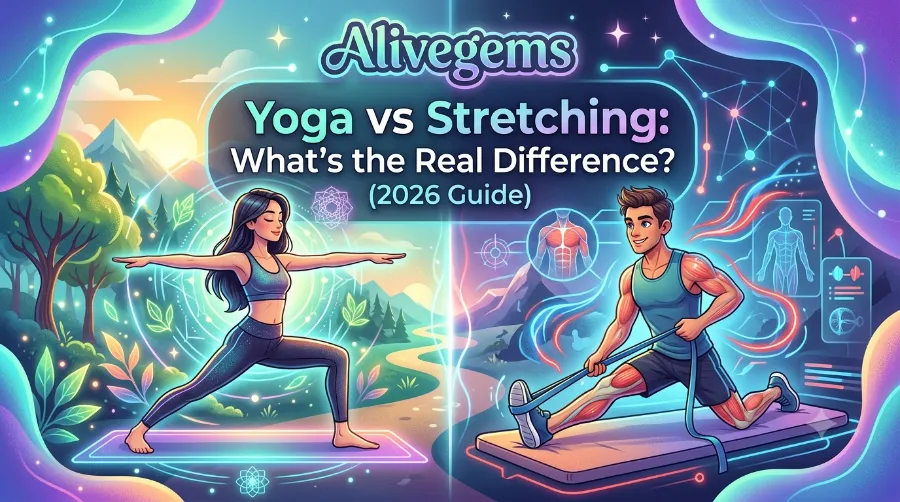
Key takeaways
| Aspect | Stretching | Yoga |
|---|---|---|
| Primary goal | Lengthen a specific muscle or muscle group | Build strength, balance, breath control and flexibility together |
| Typical session length | 5-15 minutes | 30-90 minutes |
| Structure | Isolated holds or dynamic movements | Sequenced poses (asanas) linked by breath |
| Best for | Quick pre or post workout mobility | Long-term flexibility, stress reduction, full-body conditioning |
| Breathwork involved | Rarely, or only incidentally | Central to the practice (pranayama) |
| Equipment | None needed | Mat, sometimes blocks or straps |
| Injury risk if done wrong | Moderate, mostly from overstretching cold muscles | Low to moderate, mostly from poor alignment in complex poses |
| Who it suits | Athletes needing fast pre-event mobility | People wanting a sustainable, whole-body practice |
What Is Stretching, Exactly?
Stretching is a targeted technique. You pick a muscle, you lengthen it, you hold that position or move through it repeatedly, then you stop. It is simple, and that simplicity is its biggest strength.
There are a few main types worth knowing, since they show up constantly in flexibility training conversations
.learn more about bikram vs hot yoga difference tips and expert advice.
- Static stretching — you hold a position, like a hamstring stretch, for 15 to 60 seconds without moving
- Dynamic stretching — you move a joint through its range repeatedly, like leg swings before a run
- PNF stretching — you contract a muscle first, relax it, then stretch it further, often with a partner or resistance band
- Ballistic stretching — you bounce into a stretch, a method most trainers now avoid because of injury risk
Coaches use stretching for one clear reason: it works fast on a specific tight spot. If your hip flexors are locked up from sitting at a desk all day, ten minutes of targeted stretching will loosen them noticeably by the end of the session. That immediate, localized payoff is what makes stretching so popular with runners, lifters and physical therapists.
To get a better understanding of how meditation vs exercise exactly what to expect.
But stretching has a ceiling. A 2025 stretching consensus paper covered on Yoga Medicine’s research podcast makes the point directly: stretching is one ingredient in a larger recipe, not a complete solution on its own. It can loosen a muscle for a session. It rarely rebuilds the strength, coordination or nervous system regulation that keeps that muscle loose for good. Marathon Handbook
What Is Yoga, Then?
Yoga looks like stretching from the outside. Downward Dog stretches your calves and hamstrings. Butterfly Pose opens your hips. A casual observer could easily assume yoga is just stretching with better branding. That assumption misses most of what is actually happening on the mat.
Yoga is a structured practice that layers several things at once: physical poses (asanas), breath control (pranayama), balance work, isometric strength holds and, often, a mental focus component. A single 60-minute vinyasa class might move you through 25 to 40 poses, each held with a specific breath pattern, each building on the muscles engaged in the last one.
This is where the yoga vs stretching comparison really separates. Marathon Handbook’s breakdown of the two practices explains it well: yoga is structured flow plus mindfulness, while stretching is targeted muscle elongation. That single sentence captures the entire debate. Stretching does one job. Yoga does several jobs in the same session, which is exactly why so many people ask, is yoga stretching, and land on an answer that is really “sort of, plus a lot more.” clinicaltrials
The breathwork piece deserves its own mention because it is the most overlooked difference. In yoga, breathwork is one of the eight limbs of yoga alongside the physical poses, and it is used to shift the body out of fight-or-flight mode and into a calmer, rest-and-digest state. Nothing in a standard stretching routine does this on purpose. You might feel calm after stretching, but the calm is a side effect. In yoga, it is the point. clinicaltrials
If you’re curious how this plays out across different yoga styles, our comparison of Hatha vs Vinyasa yoga for beginners walks through how breath-linked movement changes depending on the style you pick, which matters a lot once you understand that breath is doing real work, not just decoration.
Yoga vs Stretching Differences: The Real Breakdown
Let’s put the two side by side without the marketing fluff.
1. Goal and Intent
Stretching has one job: lengthen a muscle. Yoga has multiple jobs running in parallel: flexibility, strength, balance, breath regulation and often stress reduction. When people ask about flexibility training specifically, stretching alone can absolutely deliver short-term range of motion gains. Yoga tends to deliver gains that stick around longer, because it is training the muscles to support that new range, not just coaxing them into it for a moment.
2. Time Investment
A stretching session can be five minutes. A proper yoga class runs 45 to 90 minutes. If you have four minutes before a run, stretch. If you have an hour and want a full reset, yoga wins.
3. Strength Component
This is the difference most people miss entirely. Static stretching does not build strength. Yoga does, through poses like Plank, Warrior II and Chair Pose that hold your body isometrically against gravity for extended breaths. Research summarized by Samarali on flexibility training methods notes something important here: yoga typically produces superior long-term flexibility results because it builds the strength needed to support increased range of motion safely, while flexible muscles without adequate strength can lead to joint instability and a higher risk of strain. Yoga Journal
In plain terms: getting bendy without getting strong is a recipe for a wobbly, injury-prone joint. Yoga builds both qualities in the same session. Stretching, done alone, usually builds only one.
4. Duration of Results
Here is a number worth remembering. Samarali’s review of flexibility research points to a specific study: a 2016 study published in the International Journal of Yoga found that participants who practiced yoga three times a week for 10 weeks showed significantly greater improvements in hamstring flexibility and lumbar mobility than a static stretching group meeting the same frequency. Same time commitment. Better, longer-lasting outcome from yoga. The chart above shows roughly what that gap looked like across the two measures researchers tracked.
5. Injury Risk and Timing
Not every situation favors yoga. If you’re about to sprint, jump or lift heavy, prolonged static stretching (the kind common in a slow yoga class) right before that activity can actually reduce your explosive power temporarily. That’s a well-documented finding in the 2025 stretching consensus research, and it’s a good reason athletes often save deep, held stretching for after training, not immediately before it.
6. Fascia and Connective Tissue
A German study registered in late 2025 looked specifically at what a yoga-based static stretching sequence does to the thoracolumbar fascia, the connective tissue sheet running along your lower back. The finding was refreshingly honest: immediate fascial changes after a single yoga session appeared minimal, and meaningful shifts likely require a longer, sustained practice rather than one class. Translation: don’t expect one yoga class to transform your fascia. Expect consistency to do that, over months, not minutes. Yogaresearchandbeyond
If weight management is part of why you’re comparing these two practices, our pillar guide on yoga vs Pilates for weight loss covers how a full-body practice compares to more isolated training styles for that specific goal.
Is Yoga Stretching? A Simple Way to Settle the Question
Think of it like this. Stretching is a tool. Yoga is a toolbox that contains that tool, plus several others, all connected by breath and intention.
Every yoga class includes stretching. Not every stretching routine includes yoga. That’s the cleanest way to answer is yoga stretching without overcomplicating it. A physical therapist prescribing you three specific stretches for a tight IT band is not prescribing yoga, even if one of those stretches happens to look like Pigeon Pose. The context, sequencing and breath integration are what turn a stretch into yoga, not the shape of the pose itself.
Flexibility Training: Which One Should You Actually Choose?
This depends entirely on what you’re training for, so here’s a straightforward way to decide.
- Training for a race or heavy lift this week — use dynamic stretching before, static stretching after. Save yoga for a rest day.
- Managing chronic tightness from sitting all day — a short daily stretching routine will give you faster relief for the specific tight spots.
- Wanting long-term flexibility that doesn’t disappear in a week — yoga wins here, because it pairs the range of motion with the strength to hold it.
- Dealing with stress, anxiety or poor sleep alongside physical stiffness — yoga again, since the breathwork and mindfulness components address the nervous system piece that stretching alone does not touch.
- Recovering from an injury under a professional’s guidance — targeted stretching, prescribed by a physical therapist, is usually the safer starting point before layering in full yoga sequences.
If heat and temperature are part of your recovery plan, it’s worth knowing they interact with these methods differently too, which is something our guide on hot yoga vs regular yoga covers well if that’s a route you’re considering.
What the Latest Research Says About Both
2026 has brought a wave of new data on stretching and yoga, and a few numbers are worth knowing.
The global yoga industry has grown into a genuine economic force. According to recent market analysis, the industry sits between roughly 107 and 120 billion dollars worldwide as of 2025, with projections pushing past 200 billion dollars by 2030. That growth isn’t just marketing hype. It reflects millions of individual decisions, many of them people choosing yoga specifically over plain stretching for the added benefits.
In the United States, CDC survey data from the National Health Interview Survey found that roughly 16.9% of American adults practiced yoga in a 12-month period, with participation notably higher among women, at 23.3%, compared to men, at 10.3%. About 30% of yoga practitioners reported using the practice specifically to manage or treat pain, which lines up with the strength-and-flexibility combination that makes yoga useful for rehabilitation, not just relaxation.
On the pure stretching side, newer 2025 research is refining some older assumptions. A study registered through Bahçeşehir University compared dynamic stretching against foam rolling for hamstring flexibility and muscle oxygenation, completed in mid-2025, adding to a growing body of evidence that stretching’s benefits extend beyond simple range of motion into circulation and tissue recovery too. Meanwhile, other 2025 work comparing repeated static stretching against heat-assisted stretching found that, when total time was held equal, repeating the stretch itself outperformed combining it with heat, a useful reminder that more gadgets don’t always beat more reps.
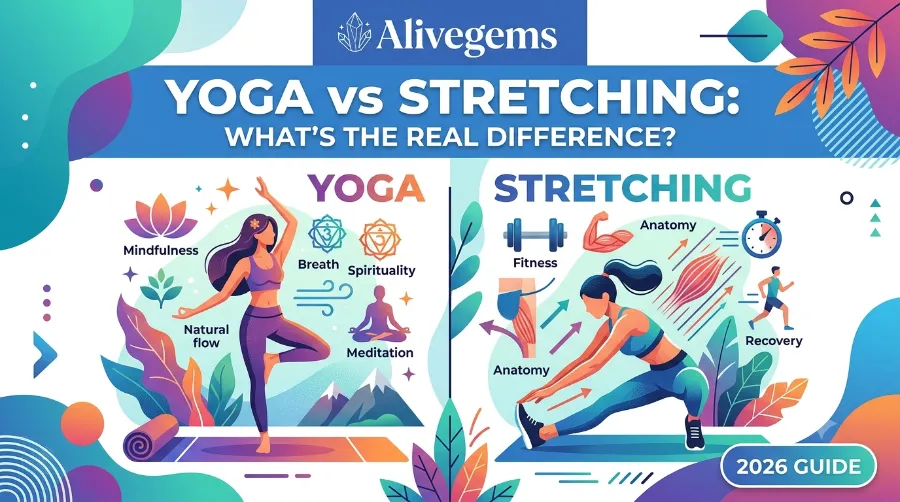
Yoga and Stretching by the Numbers (2025-2026 Snapshot)
| Metric | Figure | Source year |
|---|---|---|
| U.S. adults who practiced yoga in the past year | 16.9% | 2022 NHIS data, published 2024 |
| Women vs men participation rate | 23.3% vs 10.3% | 2022 NHIS data |
| U.S. yoga participants (2023) | Over 34 million | Statista, 2025 |
| Global yoga industry value | $107-120 billion | 2025 market analysis |
| Projected industry value by 2030 | $200+ billion | 2025-2026 projection |
| Adults using yoga to manage pain | Around 30% | CDC, 2024 |
| Flexibility gain, yoga group, 10-week study | +18% hamstring, +14% lumbar | International Journal of Yoga, 2016 |
| Flexibility gain, static stretching group, same study | +11% hamstring, +7% lumbar | International Journal of Yoga, 2016 |
Common Mistakes People Make With Both
- Assuming a single yoga class will “fix” tight hamstrings permanently, when consistency over weeks is what actually rewires flexibility
- Bouncing into stretches (ballistic stretching) instead of easing in slowly, which raises injury risk without adding benefit
- Holding deep static stretches right before an explosive workout, which can temporarily reduce power output
- Treating yoga purely as a flexibility tool while ignoring the breath and strength components that make it different from stretching in the first place
- Skipping a warm-up before either practice, since cold muscles respond poorly to sudden lengthening
Frequently Asked Questions
Is yoga just fancy stretching?
No. Stretching lengthens a muscle. Yoga combines stretching with strength holds, balance work and controlled breathing in one connected sequence, which is why the results and the experience differ so much.
Can stretching alone improve my flexibility as much as yoga?
In the short term, yes, stretching can produce fast gains in range of motion. Over the long term, research suggests yoga tends to produce more durable flexibility gains because it builds supporting strength alongside the stretch.
How often should I stretch versus practice yoga?
Daily light stretching, five to ten minutes, works well for maintenance. Yoga two to four times a week, 30 to 60 minutes per session, tends to deliver the fuller range of benefits, including stress reduction.
Is yoga safe for complete beginners with zero flexibility?
Yes, with the right style. Gentle Hatha classes are built for beginners and move slowly enough that flexibility builds gradually without strain.
Does yoga replace the need for regular stretching before workouts?
Not entirely. Athletes training for speed or power still benefit from short, targeted dynamic stretching before intense sessions, separate from a full yoga practice.
Quick Quiz: Test What You Just Learned
1. What is the main structural difference between yoga and stretching?
A) Yoga uses a mat, stretching doesn’t
B) Yoga combines poses, breathwork and strength holds, while stretching isolates one muscle at a time
C) Stretching is always faster
D) There is no real difference
2. According to the 2016 International Journal of Yoga study mentioned above, which group showed greater long-term flexibility improvement?
A) The static stretching group
B) Neither group improved
C) The yoga group
D) Only men improved
3. Why might holding a deep static stretch right before a sprint or heavy lift hurt performance?
A) It has no effect at all
B) It can temporarily reduce explosive power output
C) It always improves speed
D) It causes permanent muscle damage
4. What percentage of U.S. adults reported practicing yoga in the CDC’s 2022 survey data?
A) 50%
B) 5%
C) 16.9%
D) 90%
5. What role does breathwork (pranayama) play in yoga that is usually absent from plain stretching?
A) It has no real function
B) It helps shift the body from fight-or-flight into a calmer state
C) It only matters for advanced yogis
D) It replaces the need for poses entirely
Answer key: 1-B, 2-C, 3-B, 4-C, 5-B
Conclusion
Yoga and stretching overlap, but they are not twins. Stretching is a fast, focused tool for loosening one muscle at a time. Yoga is a broader practice that builds flexibility on top of strength, breath control and balance, which is exactly why its benefits tend to last longer and reach further than a stretch ever could on its own. Neither one needs to replace the other completely. Use stretching when you need a quick, targeted fix. Use yoga when you want a sustainable practice that changes how your whole body, and honestly your whole day, feels. Whichever you choose, or however you combine both, the research backs one simple truth: consistency beats intensity every single time.
References
- Yoga Medicine, “Stretching Research Roundup,” 2025 stretching consensus paper discussion — yogamedicine.com/stretching-research
- Marathon Handbook, “Yoga vs Stretching: Which Is Better for Mobility + Recovery?” — marathonhandbook.com/yoga-vs-stretching
- Samarali, “Which Is Better for Flexibility: Yoga or Stretching?” — samarali.com/which-is-better-for-flexibility-yoga-or-stretching
- ScienceDirect, “Immediate Effects of a Yoga-Based Static Stretching Sequence on Thoracolumbar Fascia Shear Mobility,” 2026
- ClinicalTrials.gov, NCT07024017, Bahçeşehir University, “Dynamic Stretching vs. Foam Rolling,” 2025
- CDC/NCHS, National Health Interview Survey data on yoga participation, 2022, published 2024
- NPR Health News, “Who’s Practicing Yoga in America? The CDC Has Answers,” 2024
- Statista, “Yoga Participation Levels in the U.S.” and “Yoga — Statistics & Facts,” 2025
- Stretch Affect, “Stretching vs Yoga: Understanding Differences” — stretchaffect.com/blog/stretching-vs-yoga-understanding-differences
- Divine Yog Peeth, “Yoga vs Stretching: Difference & Benefits” — divineyogpeeth.com/blog/yoga-vs-stretching-difference-benefits
- Poses Studio, “Stretching or Yoga?” — poses-studio.com/en/stretching-or-yoga
For more comparisons like this, visit RealYogaHub.com and explore our full library of yoga and wellness breakdowns.