
childs pose yoga benefits Some yoga poses ask a lot of your body. Child’s pose asks almost nothing, and yet it gives back more than most people expect. If you have ever curled into this shape at the end of a hard class and felt your shoulders finally drop, you already know part of the story. The rest of the child’s pose yoga benefits, the ones tied to your nervous system, your hips, and your everyday stress levels, are worth understanding properly.
This guide breaks down exactly what balasana does for your body, how to do it correctly, and how to modify it if your knees, belly, or ankles complain. No fluff, no vague spiritual talk, just practical information you can use tonight. To get a better understanding of warrior yoga poses beginners our guide breaks down exactly what to expect.
Key Takeaways
| What You’ll Learn | Quick Answer |
|---|---|
| Main child’s pose yoga benefits | Calms the nervous system, stretches hips and back, eases tension headaches |
| Best time to practice | Morning wake-up, midday stress reset, or before bed |
| Who should modify it | Pregnant women, people with knee pain, tight hips, or ankle stiffness |
| How long to hold it | 30 seconds to 5 minutes, breathing slowly throughout |
| Skill level | Beginner, no experience needed |
What Is Child’s Pose (Balasana)?
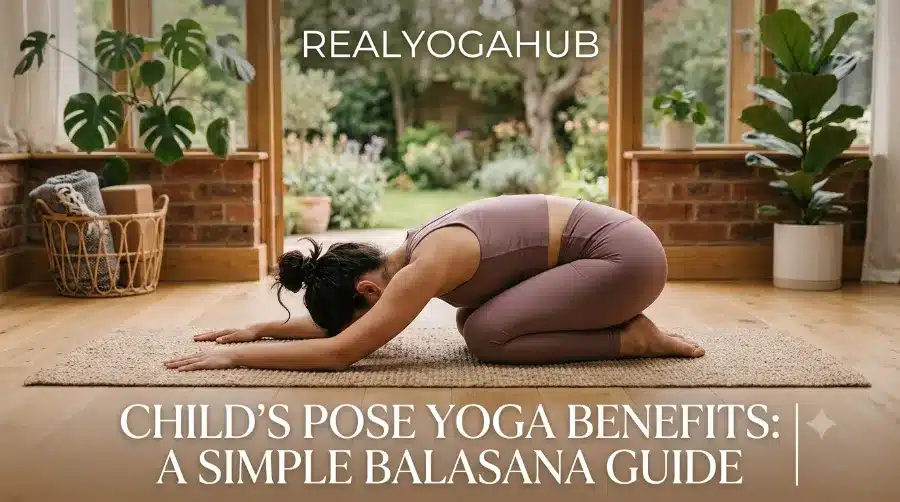
Balasana comes from the Sanskrit words bala, meaning child, and asana, meaning pose. It is a kneeling forward fold where you sit back on your heels, fold your torso over your thighs, and rest your forehead on the mat. Most teachers use it as a resting position between more demanding poses, though it stands on its own as a complete restorative yoga pose.
You will see it in nearly every style of yoga, from gentle Hatha classes to fast-moving Vinyasa flows. If you are new to a home practice, it pairs naturally with other beginner-friendly shapes covered in our 50 best yoga poses for beginners guide, which is a good starting point if balasana is one of your first poses.
Child’s Pose Yoga Benefits Backed by Research and Practice
The child’s pose yoga benefits go beyond a nice stretch. Here is what actually happens in your body when you fold into this shape.
1. It Calms an Overactive Nervous System
When you rest your forehead on the ground and breathe slowly, your body shifts out of fight-or-flight mode. According to the Cleveland Clinic, gentle forward folds like this one help activate the parasympathetic nervous system, which is responsible for rest and recovery. This is one reason therapists and yoga teachers recommend balasana for anxious moments, not just tired muscles.
Want to learn more about 10 hip opening yoga poses read our latest blog post
2. It Stretches the Hips, Thighs, and Ankles
Sitting at a desk all day shortens your hip flexors and stiffens your ankles. Balasana gently opens all three areas at once. Practicing it for even two minutes daily can noticeably improve hip mobility within a few weeks, especially if you also follow a 30-day flexibility plan alongside it.
3. It Relieves Back and Neck Tension
Because your spine lengthens passively in this fold, it can ease tightness built up from sitting or standing for long hours. Many people pair child’s pose with poses from our yoga for back pain relief guide for a fuller routine aimed at chronic tightness.
4. It Lowers Stress Hormones
A 2023 review published in the International Journal of Yoga found that restorative poses held for several minutes, including child’s pose, were linked to measurable drops in cortisol among adults practicing three times a week. That is a meaningful reason to treat this pose as more than a filler move between sun salutations. f you want to learn more about sun salutation steps beginners check out our detailed guide for practical tips and expert advice.
5. It Improves Digestion
The gentle compression on your abdomen during the fold can stimulate digestion and relieve mild bloating, according to Mind Soother. This is one of the lesser-known childs pose yoga benefits, but it is a favorite among people who practice after dinner.
6. It Trains Slower, Deeper Breathing
Because your ribs are gently pressed against your thighs, you naturally learn to breathe into your back and sides rather than just your chest. Over time, this improves breath awareness in every other pose you practice.
How to Do Child’s Pose: Step-by-Step Balasana Tutorial
This balasana tutorial works for nearly every body type. Follow these steps slowly.
- Kneel on your mat with your big toes touching and knees hip-width apart, or wider if that feels better on your hips.
- Sit your hips back toward your heels.
- Walk your hands forward until your torso rests over your thighs.
- Rest your forehead on the mat, or on a folded blanket if your neck feels strained.
- Let your arms stretch forward, palms down, or bring them alongside your body with palms facing up.
- Breathe slowly for 30 seconds to 5 minutes, letting your back rise and fall with each breath.
That is genuinely all there is to it. The pose looks simple because it is simple, though the real skill lies in relaxing fully instead of holding tension while you fold.
Modifications for Every Body
Not every body folds the same way, and that is completely normal. Try one of these adjustments if the classic version feels uncomfortable.
- Tight hips or knees: Place a rolled blanket between your calves and thighs for extra cushioning.
- Pregnant or wider belly: Spread your knees wide apart so your torso has room to fold without pressure.
- Stiff ankles: Roll a towel under your ankles to relieve the stretch on the front of your feet.
- Shoulder pain: Skip the forward-arm version and rest your arms by your sides instead.
- Can’t reach the floor: Stack your forearms on a block or bolster and rest your forehead there instead.
These small changes keep this beginner yoga rest pose accessible no matter your starting flexibility. If your hips are the main sticking point, our downward dog benefits and modifications guide covers similar adjustments that complement balasana well.
Common Mistakes People Make in Child’s Pose
Even a resting pose can be done in a way that adds tension instead of releasing it. Watch for these habits.
| Mistake | Why It Matters | Fix |
|---|---|---|
| Clenching the jaw or fists | Keeps the nervous system activated | Consciously soften your face and hands |
| Holding the breath | Cancels the calming effect | Breathe slowly through the nose |
| Forcing the forehead down | Strains the neck | Use a block or blanket for support |
| Rushing out of the pose | Loses the recovery benefit | Stay at least 30 seconds before moving |
When to Use Child’s Pose in Your Practice
Balasana fits almost anywhere. Many people use it first thing in the morning as part of a 10-minute morning yoga routine, since it gently wakes up the spine before more active poses. Others reach for it midday during a stressful work stretch, or at night as a wind-down before sleep.
Teachers also use it as a checkpoint pose between harder shapes. If a class ever gets intense, dropping into child’s pose for even 20 seconds resets your breath and heart rate before continuing.
Child’s Pose for Back Pain and Stress Relief
If your lower back tightens after long hours of sitting, balasana is one of the gentlest ways to release it without strain. The pose lengthens the muscles along your spine while taking pressure off your lower back joints, which is part of why it appears so often in programs built around chronic tension. To get a better understanding of 5 Yoga Poses to Avoid With Bad Knees our guide breaks down exactly what to expect.
According to Yoga in Wellness, consistent practice over just a few weeks can reduce both muscular tightness and the perceived intensity of stress. That combination, physical release paired with mental calm, is exactly why this pose has stayed a staple in yoga studios for decades.
The National Center for Complementary and Integrative Health also notes that yoga practices involving slow breathing and gentle stretching are associated with improvements in stress and general well-being, which lines up closely with what regular balasana practitioners report.
FAQs About Child’s Pose
Is child’s pose good for beginners?
Yes. It requires no flexibility or strength, which makes it one of the most beginner-friendly rest poses in yoga.
How long should I hold child’s pose?
Anywhere from 30 seconds to 5 minutes works well, depending on whether you are using it as a quick reset or a longer restorative hold.
Can I do child’s pose every day?
Yes, and many people benefit from doing it daily, either on its own or as part of a longer routine.
Is child’s pose safe during pregnancy?
Generally yes, with knees spread wide to make room for the belly. Always check with your doctor first.
Does child’s pose help with anxiety?
Many practitioners find it calming because the slow breathing and forward fold both support the body’s natural relaxation response.
Quick Quiz: Test What You Learned
1. What does balasana stretch primarily?
A) Shoulders and wrists
B) Hips, thighs, and ankles
C) Calves only
2. How long should you typically hold child’s pose?
A) 30 seconds to 5 minutes
B) Exactly 10 seconds
C) At least 20 minutes
3. What should you do if your ankles feel stiff in this pose?
A) Force them flat against the mat
B) Roll a towel under your ankles
C) Skip the pose entirely
4. Which nervous system response does child’s pose support?
A) Fight-or-flight response
B) Parasympathetic, rest and recovery response
C) No nervous system effect
5. Is child’s pose appropriate for beginners?
A) No, it requires advanced flexibility
B) Yes, it needs no prior experience
C) Only for advanced yogis
Answer Key: 1-B, 2-A, 3-B, 4-B, 5-B
Conclusion
Child’s pose proves that rest can be productive. It stretches tight hips, calms an overactive mind, and gives your spine a break from the demands of daily life, all without requiring a single ounce of flexibility or strength. Whether you use it as a morning wake-up, a midday reset, or a nightly wind-down, the childs pose yoga benefits stack up quickly with consistent practice. Fold forward, breathe slowly, and let this simple pose do the quiet work it does best.
References
- Cleveland Clinic. Child’s Pose overview and physiological benefits. childs pose yoga benefits
- Mind Soother. The Benefits of Child’s Pose. childs pose yoga benefits
- Yoga in Wellness. Balasana: 12 Powerful Health Benefits, How To Do It, Precautions. childs pose yoga benefits
- International Journal of Yoga. Review on restorative yoga and cortisol response, 2023. childs pose yoga benefits
- National Center for Complementary and Integrative Health. Yoga research overview.